Proper pruning plays an important role in maintaining the safety, appearance and long-term health of trees, but the wrong approach can cause lasting damage. For tree pruning in Tamborine Mountain, the right technique matters. Over-pruning, poor cuts, incorrect timing and topping can all weaken a tree rather than improve its health, shape or safety. Local conditions, tree species and seasonal growth patterns also influence how a tree responds, which is why pruning should be planned carefully before any branch is removed.
Lance’s Tree Care explains the most common pruning mistakes that can lead to structural weakness, decay, pest problems and unsafe regrowth. This article covers why timing, cutting technique and branch selection matter, along with when pruning work is best handled by a qualified arborist to protect both the tree and the surrounding property.
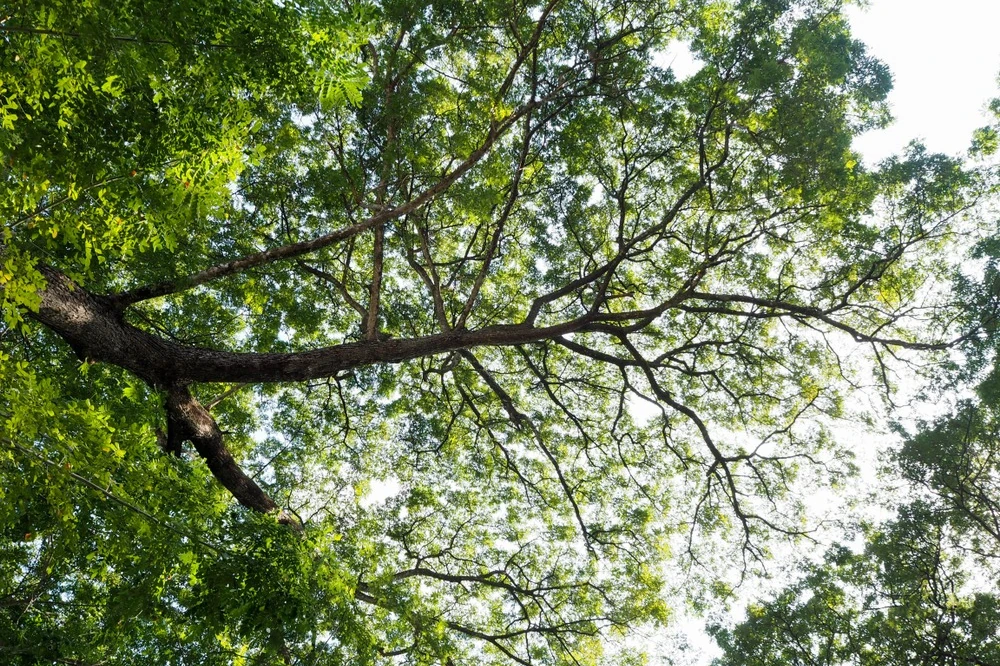
Removing too much live growth in one pruning session is one of the fastest ways to weaken or disfigure a tree. Leaves are the tree’s main energy source, so cutting away a large section of canopy reduces the tree’s ability to photosynthesise and recover. This can place unnecessary stress on the root system, slow future growth and make the tree more vulnerable to pests, disease and environmental pressure.
Over-pruned trees often respond by producing fast, upright water shoots or suckers. These shoots may look like healthy regrowth at first, but they are usually weakly attached and more likely to snap during strong winds or storms. Heavy canopy removal can also expose inner branches and bark to sudden sun and heat, increasing the risk of sunscald, cracked bark and dieback.
A useful guideline for many established trees is to avoid removing more than about 20 to 25% of the live canopy in a single year. Young, healthy trees may tolerate slightly more in some cases, while mature, stressed or declining trees often need far less removed at one time. Warning signs of over-pruning include large bare sections, long limbs cut back to stubs and a “lion-tailed” look where foliage is left only at the branch tips.
When a tree needs significant reduction for clearance, safety or shape, the work is often better spread over multiple seasons. Selective pruning removes specific dead, damaged, crossing or poorly attached branches first. After that, the tree can be reassessed before any further live growth is removed. This approach protects the tree’s structure and avoids putting it under unnecessary stress.
The way a branch is cut has a major impact on how well the tree recovers. Poor cuts can leave large wounds, encourage decay, strip bark or damage the tree’s natural defence system. A correct pruning cut allows the tree to seal the wound as efficiently as possible while maintaining the strength of the branch union.
One common mistake is cutting too close to the trunk. This is known as a flush cut. It removes the branch collar, which is the slightly swollen area at the base of a branch where the tree is biologically prepared to close over a wound. When the collar is removed, the wound becomes larger and takes much longer to seal, increasing the risk of internal decay.
The opposite mistake is leaving a long stub. A stub does not have enough active tissue flow to close properly, so it often dries out, cracks and becomes an entry point for fungi, insects and decay. Over time, this decay can travel back into the branch union or trunk.
Correct cuts should be made just outside the branch collar without cutting into it or leaving an unnecessary stub. When shortening a branch rather than removing it completely, the cut should be made back to a suitable lateral branch. As a general rule, that lateral branch should be at least one-third the diameter of the section being removed. Cutting halfway along a branch without a strong side branch usually creates weak regrowth and poor structure.
Large limbs also need careful handling. Removing a heavy branch in one cut can cause the bark to tear down the trunk as the branch falls. A safer method is the three-cut technique: an undercut is made first, a second cut removes the weight of the branch and a final cut removes the remaining stub just outside the branch collar. This prevents tearing and helps protect the tree’s structure.
Timing is another common pruning mistake. Cutting at the wrong time can interfere with a tree’s growth cycle, reduce flowering, increase stress or make the tree more vulnerable to pests and disease. The best time to prune depends on the species, age, condition of the tree and the reason for the work.
For many shade and ornamental trees, structural pruning is often best done in late winter or very early spring while the tree is still dormant. During this period, the tree has stored energy ready for spring growth, insect activity is generally lower and the branch structure is easier to see without dense foliage. Once growth resumes, the tree can begin sealing pruning wounds more effectively.
Pruning during extreme heat, drought or periods of stress should generally be avoided unless the work is urgent. Heavy pruning in these conditions can reduce the tree’s ability to produce and store energy. It can also expose bark and inner limbs to heat, increasing the risk of damage.
Flowering trees need extra care with timing. Trees that flower on old wood, such as many spring-flowering varieties, form their buds during the previous growing season. Pruning them in winter or early spring can remove the very buds that would have produced flowers. These trees are usually best pruned soon after flowering finishes. Trees that flower later on new wood are often pruned in late winter before new growth begins.
Light pruning, such as removing small dead branches, water shoots or minor crossing growth, may be suitable at other times of year. However, larger cuts should be timed carefully to avoid unnecessary stress.
Pruning is not simply cutting off branches that look messy. Removing the wrong branches can weaken the whole tree, even when the finished result looks neat at first. Good pruning starts with understanding which branches are helping the tree’s structure and which ones are creating future problems.
Branches that are dead, diseased, damaged, crossing, rubbing or poorly attached are usually the first to consider. These branches can increase the risk of failure, restrict healthy growth or create wounds where they rub against other limbs. Removing them helps improve the tree’s structure without stripping away unnecessary live growth.
Problems occur when structurally important branches are removed without a plan. Cutting out a main leader, removing a large primary limb or heavily pruning one side of the canopy can leave the tree unbalanced. This may shift weight unevenly, create large wounds and trigger dense weak regrowth near the cut.
Co-dominant stems also require careful assessment. These are two main stems growing from the same point, often with a narrow union between them. Removing one stem suddenly may create a large wound, while ignoring the issue may allow the weak union to worsen over time. In many cases, staged structural pruning is safer than a single heavy cut.
A balanced pruning plan considers the whole tree, not just the branch being removed. The aim is to improve strength, clearance and health while preserving as much useful live canopy as possible.
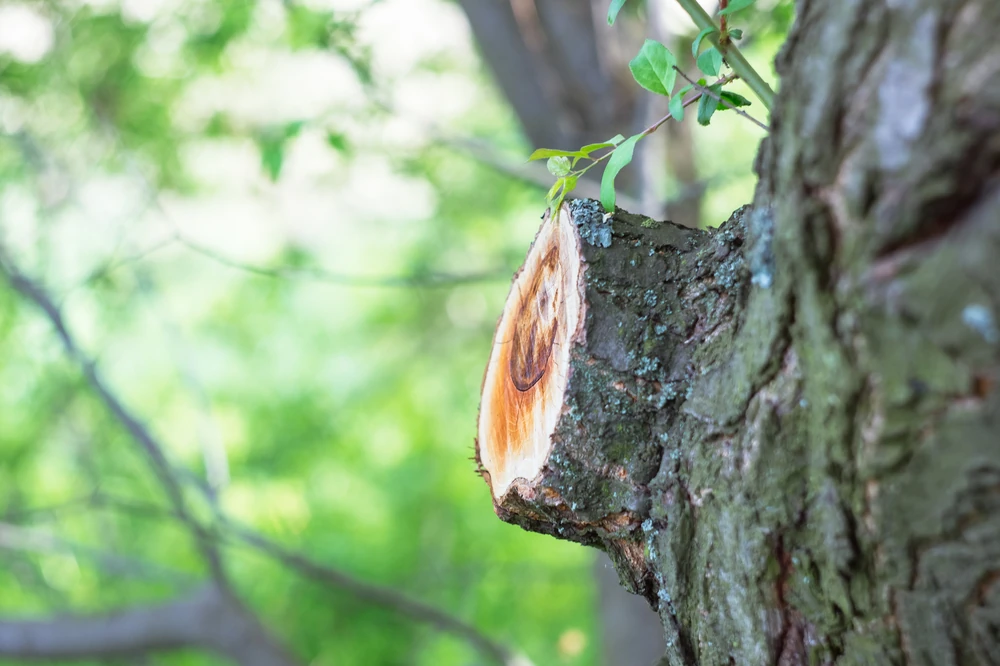
Topping is one of the most damaging pruning practices. It involves cutting the main leaders or large branches back to stubs, usually to reduce the height or size of a tree quickly. Although it may seem like a simple solution for a tree that has grown too tall or too close to a building, topping usually creates more problems than it solves.
When a tree is topped, a large portion of its canopy is removed at once. This strips away the foliage needed for energy production and leaves large exposed wounds that are difficult for the tree to seal. The cut stubs often dry, crack and become entry points for decay, insects and disease.
Topped trees also respond with fast, dense regrowth near the cut points. These new shoots are usually weakly attached and can become hazardous as they grow larger. The tree may regain its previous height within a few years, but with a weaker and more unstable structure than before.
Proper crown reduction is different from topping. Instead of cutting branches back to random stubs, reduction pruning shortens selected limbs back to healthy lateral branches. This helps reduce height or spread while maintaining the tree’s natural form and stronger branch attachments.
If a tree has genuinely outgrown its location, proper pruning may only be part of the solution. In some situations, staged pruning, long-term management or removal and replacement with a more suitable species may be safer than repeated heavy cutting.
Different trees respond to pruning in different ways. A method that works well for one species, age or location may cause stress or structural problems in another. Treating every tree the same is a common mistake that often leads to poor results.
Young trees usually benefit from light, regular structural pruning. Small cuts made early can help establish a strong central leader, well-spaced main branches and a balanced canopy. This reduces the need for large corrective cuts later.
Mature trees require a more conservative approach. Removing large limbs from an established tree creates bigger wounds and can affect the balance between the canopy and root system. Older trees, stressed trees or trees that have been heavily pruned in the past often need minimal, targeted work rather than aggressive thinning or reduction.
Site conditions also influence the correct pruning method. A tree near a building, driveway, fence, power line or road may need clearance pruning, but that does not mean the whole canopy should be heavily cut back. A screening tree may need density preserved, while a shade tree may need structural work that maintains canopy cover. The reason for pruning should guide the method, not the other way around.
Good pruning considers species, age, condition, location and the long-term goal of the work. This is especially important in areas where trees may be exposed to strong winds, changing moisture levels and varied terrain.
Small, low branches can often be managed safely with the right hand tools, but large or hazardous branches are a different matter. Heavy limbs can carry significant weight and stored tension. When they are cut incorrectly, they can split, swing, tear bark or fall unpredictably.
DIY pruning becomes risky when ladders, chainsaws, power lines or heavy branches are involved. A falling branch can damage roofs, fences, vehicles or nearby structures. It can also cause serious injury. Even if the branch falls safely, the tree may be left with a torn wound or damaged branch collar that increases the risk of decay.
Large branches are also often part of the tree’s main structure. Removing them without understanding load, balance and attachment strength can affect the tree’s long-term stability. A poor cut near the trunk or a major union can create decay pathways that weaken the tree over time.
Professional help is usually needed when a branch is large, high, close to structures, near power lines or attached to a tree showing signs of decay, cracks or storm damage. Qualified arborists use proper cutting methods, climbing techniques, aerial equipment and rigging systems to lower branches safely and protect the tree where possible.
Tree pruning can also be affected by local council rules. Many councils have requirements around protected trees, significant vegetation, street trees and the amount of pruning that can be done without approval. Ignoring these rules can lead to fines, stop-work orders or the need for remedial action.
Local rules may apply to tree size, species, location or environmental value. Some trees may need permission before major pruning or removal. Street trees and trees on nature strips are often managed by council rather than the property owner, even when they are directly outside a home.
Boundary trees also need care. Property owners may be allowed to prune overhanging branches in some circumstances, but access to a neighbour’s property generally requires permission. Any pruning near fences, footpaths, roads or shared boundaries should be planned carefully to avoid disputes or unsafe work.
Trees near power lines are another major concern. Work close to overhead service lines or utility corridors should only be handled by authorised professionals. Branches near live power infrastructure create serious safety risks and may be subject to separate utility requirements.
Before pruning protected, mature, street or boundary trees, it is safer to check the relevant local rules and obtain any required approvals. This protects the property owner, the tree and the surrounding area.
Effective pruning is about more than removing unwanted branches. Poor timing, heavy cutting, topping and incorrect branch cuts can weaken a tree, encourage decay and create future safety risks. In many cases, the damage caused by poor pruning may not become obvious until months or years later.
By understanding how trees respond to pruning, property owners can make better decisions about when to prune, how much to remove and which branches should stay. Careful pruning supports healthier growth, stronger structure and safer outdoor areas.
When the work involves large trees, dangerous branches, unclear tree rules or signs of decay, a qualified arborist can assess the tree properly before any major cuts are made. With the right approach, pruning helps protect tree health, property safety and the long-term appearance of the landscape.


