Trees are a major part of everyday life in Queensland. They provide shade during extreme heat, help protect homes from strong winds, support native wildlife and add long-term value to properties. In areas such as Tamborine Mountain, trees are also a defining part of the local landscape and community character. When branches begin to creep too close to buildings, block views, or interfere with power lines, many homeowners naturally assume trimming or lopping is a straightforward maintenance job.
The reality is that Queensland tree laws are far more complex than most people realise. At Lance’s Tree Care, we often speak with homeowners only after a council warning or fine has already been issued. Taking the time to understand the rules before any cutting begins is the simplest way to avoid unnecessary costs, delays and legal consequences.
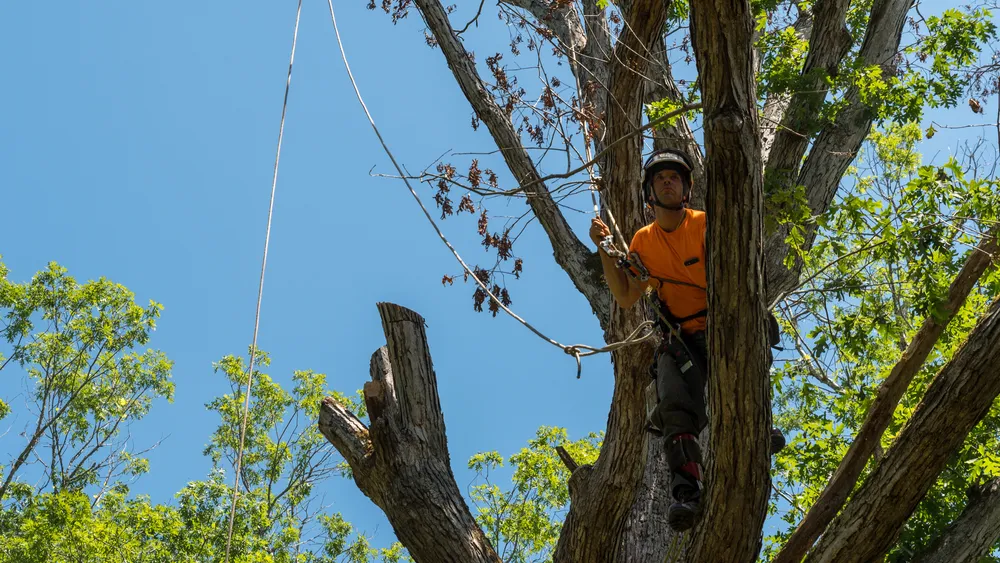
Queensland does not operate under a single statewide tree-lopping law. Instead, responsibility sits with local councils, which regulate trees through planning schemes, vegetation protection overlays and environmental controls. This means the rules can vary significantly depending on where your property is located, how the land is zoned and whether environmental protections apply.
What may be allowed in one suburb can be restricted just a few streets away, which is why it’s so important not to rely on assumptions or general advice.
Many homeowners are surprised to learn that even trees growing entirely within their boundary aren’t always theirs to manage freely. In practice, councils regulate trees because their impact extends well beyond individual properties. Trees influence soil stability, drainage patterns, bushfire behaviour and the wider ecosystem.
Councils place limits on tree work to reduce risks such as:
Because of these risks, councils often prioritise preservation over convenience, particularly in elevated or environmentally sensitive areas.
Pruning and lopping are not treated the same under council regulations. Pruning generally refers to selective cutting that maintains the health, balance and natural shape of a tree. Tree lopping, on the other hand, involves excessive removal that significantly alters the tree’s structure.
This can include cutting large limbs without proper technique, reducing the canopy too heavily, or topping a tree to control height. From a council’s perspective, lopping is a concern because it weakens the tree and encourages rapid, unstable regrowth. Over time, this regrowth can become more hazardous than the original branches, increasing the risk of failure during storms and creating ongoing safety and maintenance issues.
Tree protection is determined using a combination of criteria rather than a single rule. Councils assess factors such as species type, trunk diameter measured at a set height, canopy spread and the tree’s role within the surrounding environment.
In locations like Tamborine Mountain, additional environmental overlays apply, meaning a higher percentage of trees are regulated. This is why tree lopping in Tamborine Mountain often requires careful assessment before any work begins, even when the tree appears manageable or partially damaged.
Knowing whether council approval is required is one of the most important steps in legal tree management. While some minor maintenance is usually permitted, many common tree works require written council approval before they can proceed.
Council approval is commonly required when work involves removing a tree, significantly reducing its size, or altering its structure. This includes major limb removal, canopy reduction beyond allowable limits and any form of lopping in areas covered by vegetation protection overlays.
Even trees that appear unhealthy, overgrown, or inconvenient may still require approval unless they pose an immediate and verified safety risk. In many cases, councils require supporting evidence, such as an arborist report, before granting permission.
Significant vegetation is not defined by size alone. Councils also consider ecological and functional value. A tree may be classified as significant if it contributes to slope stability, provides habitat for native wildlife, or forms part of a recognised vegetation network.
Trees that shape the visual character of a street or help protect neighbouring properties from wind and sun may also fall under this category. This broader definition often surprises homeowners who assume only very large or native trees are regulated.
Most compliance issues don’t come from bad intentions. They usually happen because homeowners act before fully understanding the rules. A common assumption is that storm damage automatically allows unrestricted cutting, which isn’t always the case.
Others rely on advice from neighbours or unqualified operators who may not be familiar with council regulations. In many situations, homeowners only realise there’s an issue when a council notice arrives weeks later, often after the work has already been done. Once unauthorised cutting has taken place, councils can issue fines, stop-work orders, or require replacement planting, even if the work was done with good intentions.
Tree regulations aren’t designed to prevent maintenance altogether. Instead, they aim to ensure trees are managed safely, responsibly and with minimal environmental impact.
Most Queensland councils allow limited maintenance without approval, provided the work does not alter the tree’s overall structure or health. This typically includes removing dead or diseased branches, light pruning for safety clearance and preventing branches from contacting buildings or essential services.
The challenge is knowing when routine maintenance crosses into regulated work, as this threshold can vary between councils.
Professional pruning is often the most effective way to manage risk while remaining compliant. Selective pruning improves airflow, reduces wind resistance and removes hazards without compromising the tree’s structural integrity.
Lopping, while it may seem like a quick solution, often leads to excessive regrowth, higher long-term maintenance costs and increased scrutiny from council authorities.
If there is any uncertainty, a qualified arborist can provide clarity before work begins. An arborist assessment can identify protected trees, recommend compliant pruning strategies and prepare documentation required for council approval.
This step is especially important in regulated areas, where even minor mistakes can result in penalties or enforced remediation.
Queensland’s tree laws exist to protect homeowners, communities and the environment, but they are not always straightforward. Making informed decisions, checking council requirements and seeking professional advice early can prevent fines, delays and long-term problems. If you’re unsure how the rules apply to your property, Lance’s Tree Care is here to help you manage your trees safely, legally and with confidence.


