Tree roots can create problems long before signs of damage become obvious above ground. Roots may lift driveways and paths, interfere with foundations, affect drainage or spread through lawns, raising concerns about whether they can be cut without putting the entire tree at risk. Cutting the wrong roots, removing too much or making cuts too close to the trunk can weaken the tree and compromise its health and stability.
For those considering tree lopping in Tamborine Mountain, understanding how root systems support tree health and stability is an important part of managing trees safely. Lance's Tree Care can assess the condition and structure of a tree before root cutting is considered, helping identify potential risks and suitable alternatives where roots are involved.
The level of risk depends on various factors. Knowing which roots may need to remain intact, when root pruning may be appropriate and when professional assessment is needed can help address conflicts with buildings, driveways, underground services and other parts of the property.
Tree roots can sometimes be cut safely when only a small amount of the root system is affected and important structural roots remain intact. The risk depends on the root’s size and location, tree health, soil conditions and the amount of root removal required.
Root cutting is not automatically safe simply because only one or two roots are affected. The size, location and condition of the roots should be considered before cutting takes place.
Some roots are more important to tree stability than others. Large structural roots close to the trunk and roots that contribute to support on one side of the tree should be treated with caution.
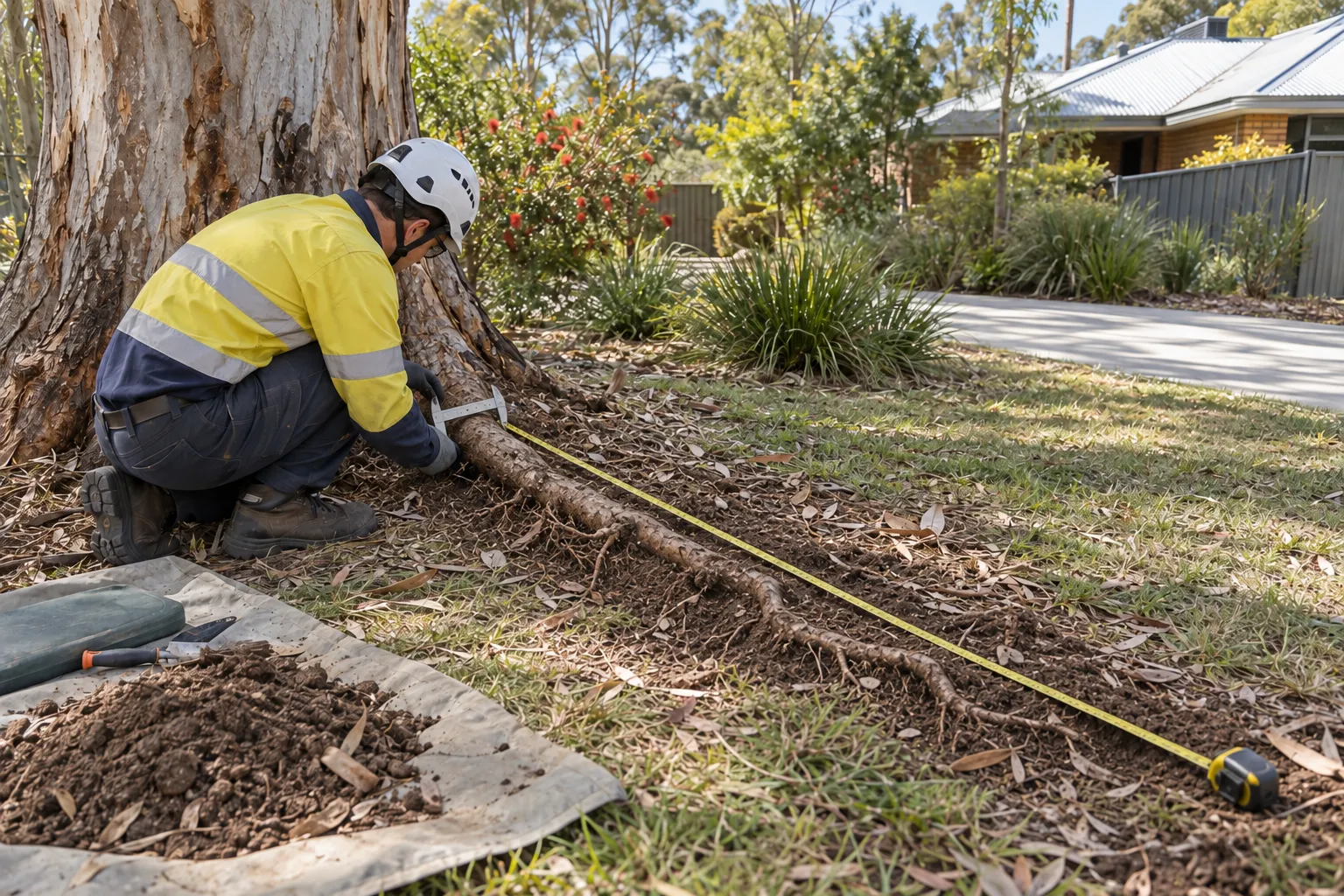
Before any root is removed, its size, location and role within the root system should be considered. A damaged or diseased root should also not automatically be removed if it may still contribute to structural support.
Large roots close to the trunk can contribute to anchoring the tree. Removing them may weaken the tree when multiple major roots are affected or the tree is already exposed to challenging site conditions.
Roots around the trunk flare should also be protected wherever possible, as unnecessary disturbance in this area can affect important parts of the root system.
Removing several roots from one side can reduce the balance of the tree’s root support and increase the risk of movement. This can be important when trenches, driveways, foundations or other construction work require excavation through the root zone.
Where possible, work should be planned to retain major roots rather than removing several roots from the same area.
A damaged or decaying root is not necessarily safe to remove. If it still contributes to the tree’s stability, cutting it may create additional risk.
The condition of the root should therefore be considered alongside the health, structure and stability of the whole tree.
Cutting tree roots can affect both the health and stability of a tree. The impact depends on how much of the root system is removed, where the roots are located and the condition of the tree and surrounding soil.
Roots absorb water and nutrients, store energy and help anchor the tree. Root loss can therefore affect the tree gradually, with some symptoms appearing months or even years after the cutting.
Removing roots can reduce water and nutrient uptake and limit stored energy available for recovery. Possible signs include smaller or discoloured leaves, premature leaf drop, reduced growth and canopy dieback.
Trees already affected by drought, disease, poor soil or other stress may have less capacity to recover. Damaged root tissue can also create opportunities for decay organisms to enter.
Major roots contribute to anchoring the tree within the surrounding soil. Removing several important roots can reduce this support and increase the risk of movement or failure during strong winds or other adverse conditions.
The risk may be greater on slopes, in loose or saturated soil, or where other site conditions have already affected stability.
Roots near buildings, driveways and underground services can create difficult conflicts, but cutting them is not always the safest solution. Excavation can also damage roots that are not immediately visible.
Recognising the signs that tree roots are causing property damage can help determine whether roots are contributing to lifted paving, drainage problems, soil movement or structural changes before cutting is considered.
Before removing roots, their size, location and condition should be assessed. Modifying the structure or using a root barrier can resolve the conflict without too much root loss.
Where roots conflict with structures or services, cutting should not be the first option without considering its potential effect on the tree. A suitable alternative may resolve the problem while preserving more of the root system.
Cutting is not always necessary when tree roots affect paths, driveways, lawns or other parts of a property. Working around the roots can help preserve tree stability while addressing surface damage or other conflicts.
The most suitable approach depends on the location and size of the roots, the condition of the tree and the surrounding site.
Paths, driveways and patios can sometimes be adjusted to accommodate existing roots rather than cutting them. Raising or redesigning a surface, changing its route or using flexible paving may provide more room for root growth.
Exposed roots can be protected with suitable surface treatments. Mulch can cover exposed roots, retain moisture and protect the surrounding soil while reducing damage from foot traffic and equipment.
Compacted or poorly drained soil can restrict healthy root development and contribute to surface-root problems. Improving drainage, reducing heavy traffic and maintaining suitable soil conditions can help protect the existing root system.
Tree roots should not be cut close to the trunk, particularly when they are large or appear to provide structural support. A commonly used arboricultural guide is to treat the area within around 3 to 5 times the trunk diameter as a zone where root cutting may carry greater risk, rather than as a guaranteed safe or unsafe boundary.
For example, a tree with a 300 mm trunk would give a general range of around 900 mm to 1.5 metres. This is only a guide, as root structure varies between trees and the appropriate assessment also depends on root size, soil conditions, tree health and the amount of root removal proposed.
When roots close to the trunk need to be removed for construction, drainage, foundations or underground services, the work should be assessed before cutting begins. An arborist can determine whether the proposed work can proceed or should be modified to retain important roots.
A tree’s ability to recover from root cutting depends on its health, age, species, root structure and growing conditions. Limited removal of smaller roots may have little long-term effect on a healthy tree, while damage to major roots can lead to decline or reduced stability.
The amount and location of root loss are also important. Root disturbance close to the trunk or concentrated in one area can have a greater effect than limited pruning of outer roots, while drought, extreme heat and poor soil conditions can make recovery more difficult.
Healthy trees have more capacity to recover from limited root disturbance than trees affected by drought, disease, decay, pests or poor growing conditions. Recently planted trees may also be vulnerable while their root systems are developing.
Species can respond differently to root disturbance, so the characteristics and condition of the individual tree should be considered.
The size, number and location of the roots being removed can affect the outcome. Several major roots removed from one area can reduce the tree’s access to resources and its physical support.
Root removal should be limited to what is necessary, with the remaining root system protected from additional excavation, compaction and disturbance.
Compacted, shallow or poorly drained soil can make trees more vulnerable to additional root loss. Heat, drought, strong winds and saturated soil can add further stress after cutting.
Roots should be exposed carefully and protected from unnecessary damage during excavation. Maintaining suitable conditions around the remaining root zone can also help reduce additional stress.
There is no single amount of root loss that guarantees a tree will survive. Where significant or structural roots are involved, professional assessment can help determine the potential risks.
The best time to cut tree roots is generally during mild weather when the tree is healthy, adequately hydrated and not already under environmental stress. Extreme heat, drought, heavy rainfall and strong winds can make root disturbance more stressful.
Timing also depends on the tree species, local climate and natural growth cycle. Some deciduous trees may tolerate root disturbance better during dormancy, while evergreen species and trees in warmer climates may have different requirements.
Root cutting should also be avoided where possible when the tree is already dealing with drought, disease, construction disturbance or other major stress. For root removal, an arborist can assess the tree and site to determine suitable timing.
Root cutting should only remove what is necessary while protecting the remaining root system. Root pruning, particularly near the trunk or where stability may be affected, should be assessed before work begins.
Roots should be exposed carefully before decisions are made about removal. Suitable excavation methods can help reveal their size, direction and location while limiting unnecessary damage.
Where the work involves trenching or substantial ground disturbance, the applicable Queensland excavation safety requirements should also be considered before excavation begins.
The exposed roots should be assessed to determine whether removal could affect the tree’s stability or health. Major roots close to the trunk or multiple roots in the same area require particular caution.
Where root removal has been assessed as appropriate, cuts should be made cleanly rather than leaving torn or crushed root tissue. Only the material needed to resolve the problem should be removed. The remaining root zone should be protected from drying, machinery, foot traffic and excessive compaction, with disturbed soil replaced carefully.
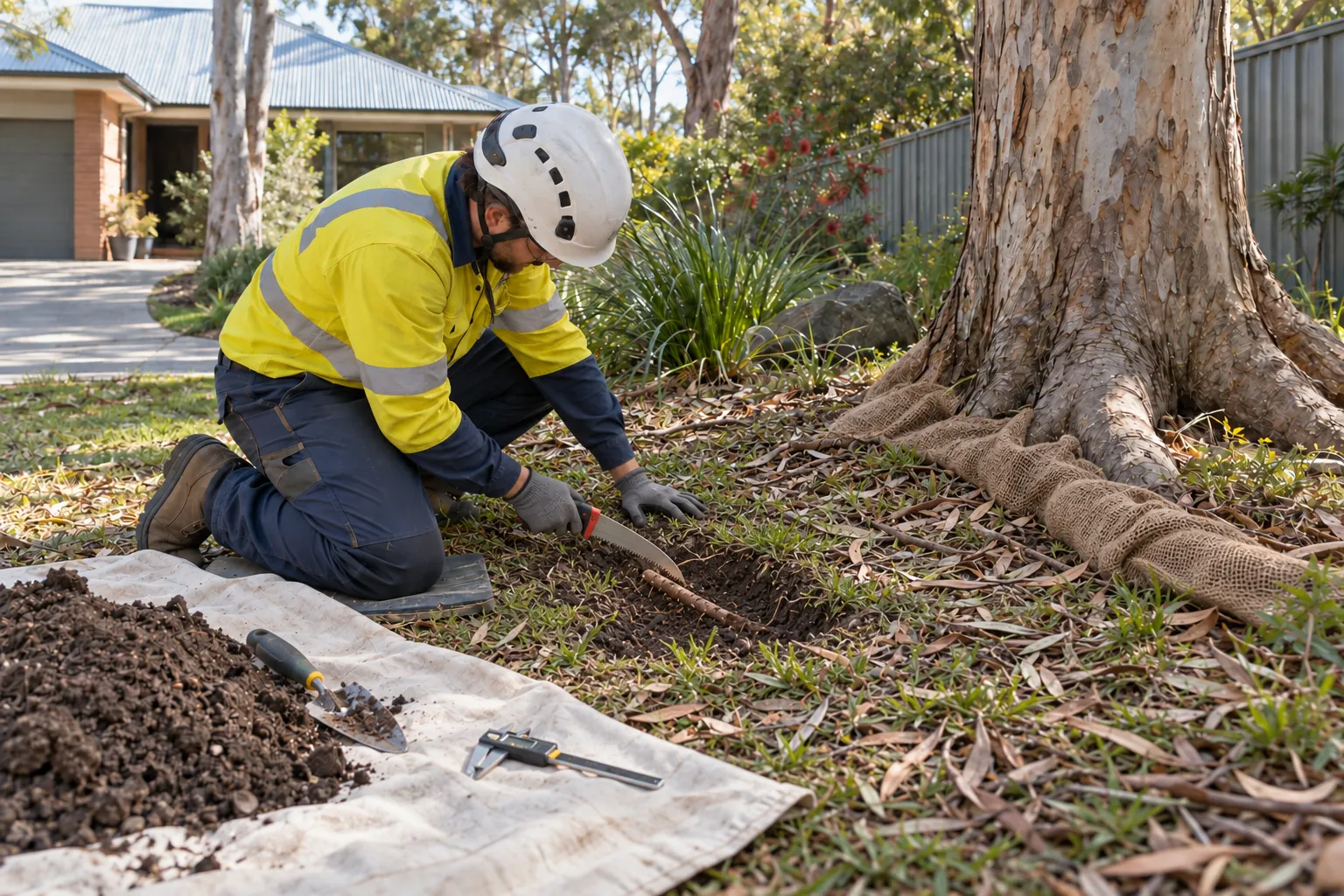
Root damage may not become visible immediately. Signs such as canopy dieback, premature leaf drop, reduced foliage or changes in stability should be monitored after root disturbance.
When structural roots are involved, cutting may not be the safest option. An arborist can assess whether pruning, redesign or another approach would better protect the tree.
Professional assessment is recommended when root cutting could affect a tree’s stability, health or surrounding structures. Small surface roots may require limited intervention, but root removal should be assessed before cutting begins.
If substantial root damage has already affected the tree’s health or stability, an assessment can help determine when tree removal may be the safest option rather than attempting further root pruning.
Professional assessment can help identify potential risks before roots are cut and determine whether root removal is appropriate. It can also help find alternatives that address the site issue while preserving as much of the root system as possible.
If root damage involves a neighbouring property and cannot be resolved informally, information about the Queensland tree dispute process explains the available tribunal process and the potential role of arborist evidence.
Cutting tree roots does not always mean a tree will die, but removing the wrong roots or too much of the root system can affect its long-term health and stability. Root size, location, tree condition and soil conditions all need to be considered when roots are affecting buildings, driveways, drainage or underground services.
Lance's Tree Care can assess the tree and surrounding site to determine whether root pruning is appropriate or whether another solution would be safer. Professional assessment can help minimise unnecessary root damage while protecting the tree and surrounding property.


