Tree roots operate silently beneath the surface and when visible problems begin to appear, they are often misinterpreted or overlooked. Issues such as cracked paths, lifted driveways, distorted fences and persistent moisture can indicate deeper root-related activity that extends beyond what is immediately visible. In areas where mature vegetation is common, including situations involving tree removal in Tamborine Mountain, understanding how root systems interact with soil, drainage and built structures is essential for accurate diagnosis.
Lance’s Tree Care examines the early signs of root-related damage across surfaces, structures and underground services. It also explains how root growth influences soil conditions and why these effects often resemble ordinary wear or settling. By identifying patterns and distinguishing between minor surface changes and genuine structural risk, property owners can respond appropriately and reduce the likelihood of long-term damage.
Tree root problems typically begin quietly, long before obvious damage appears. Early signs are often subtle, scattered and easy to blame on normal settling or ageing of a property. By the time cracks, heaving or moisture issues are clearly visible, roots may already have altered soil structure or undermined nearby surfaces.
Understanding why this damage hides in plain sight helps explain why professional assessment is so important. Many of the early indicators mimic common household issues and the root systems doing the damage are entirely out of view.
Tree roots spread far beyond the visible canopy and often travel laterally in search of moisture and oxygen. In many cases, the most aggressive structural roots are 12 to 24 inches below the surface, where they cannot be seen without excavation. As they grow, they gradually displace soil under foundations, patios, walkways and driveways.
Because this process is slow, changes in grade or support happen over months or years. Small height differences between slabs or very fine hairline cracks rarely trigger concern. Homeowners often only notice roots when they visibly surface, buckle a path or appear at the soil line, even though the real structural impact began long before.
Initial root damage often looks like issues typically blamed on weather, time or construction quality. For example:
These can be the first signs that roots are altering soil moisture or pushing against structures. Seasonal expansion and contraction of clay soils around roots can further disguise the problem. Movement may appear after heavy rain, then ease in dry spells, so it seems temporary rather than progressive.
Tree root damage rarely appears as a sudden failure. It typically advances in small increments, so each new crack or misalignment seems only slightly worse than the last. This gradual change allows property owners to adapt their expectations and overlook the pattern.
A path that is only a few millimetres out of level one year may be several centimetres higher two or three years later. A tiny crack by a window may widen each season imperceptibly. Without a clear starting point or dramatic event, it is easy to postpone investigation and repairs.
Tree roots often cause problems long before they are visible above ground. Recognising early changes in turf, garden beds and bare soil helps prevent more serious structural issues later. Most warning signs start subtly, such as uneven grass growth or persistent dry patches that do not respond to watering.
Not every patchy lawn or struggling plant is caused by roots, so it is important to look for patterns that match the spread of nearby trees. Consistent symptoms radiating from a trunk or following a line away from a tree usually point to root interference.
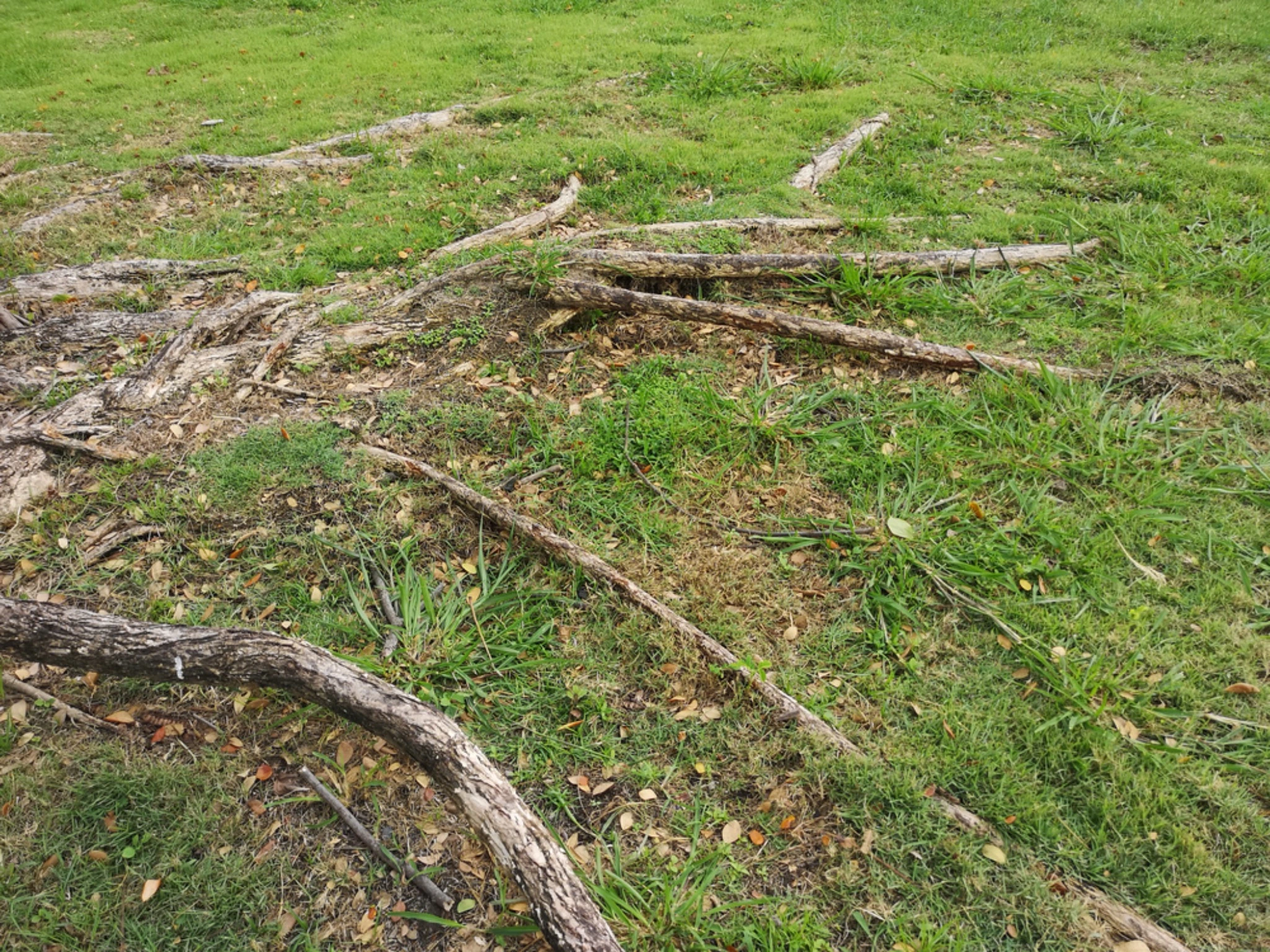
Raised or rippled sections of turf that create an uneven walking surface are a classic sign of roots pushing upward. These areas often feel firm underfoot rather than soft like thatch buildup. In some cases, roots become visible just under or at the soil surface, forming ridges that a mower frequently scalps.
Grass that thins out in a ring or crescent shape around a tree is another indicator. As roots claim more water and nutrients, the turf directly above them often appears:
Compacted areas that resist aeration or are difficult to insert a screwdriver into often mark zones of heavy root activity.
In garden beds, roots compete aggressively with shrubs and perennials. Plants near established trees may show stunted growth and smaller leaves compared to the same species planted farther away. Flowering can be reduced and some plants may fail to leaf out fully in spring.
Wilting that returns quickly after watering is a strong clue that tree roots are drawing moisture away from the bed plants. Soil in these spots can feel dry only a few centimetres below the surface, even when a mulch layer appears moist. Shallow surface roots weaving through the topsoil or visible when moving mulch are further evidence.
Cracking or heaving in edging materials such as bricks or pavers around beds often occurs when expanding roots lift them from beneath. Gaps opening between edging pieces along the side closest to a tree usually indicate lateral root pressure rather than simple settling.
Tree roots change how water moves through soil. Raised mounds developing gradually around a trunk or along a root line suggest roots enlarging over time. These mounds may direct water away, leading to dry streaks and uneven moisture.
In sloped areas, exposed roots can appear where soil has eroded off their upper surface. This is not only a sign of root expansion but also a factor that accelerates further erosion as water channels along root paths. Persistent narrow ruts or channels in soil that follow a straight path from a tree often track major roots just below the surface.
Fissures or small cracks in bare soil near larger trees can indicate shrinkage where roots have removed significant moisture. When these align in arcs or lines pointing back to the trunk, root activity is commonly involved.
Tree roots can quietly shift hard surfaces long before obvious cracks appear. Recognising early signs around paths, paving and driveways helps prevent trip hazards, water pooling and costly structural repair rather than simple surface fixes.
Not every crack is caused by roots. However, specific patterns and changes in the surface level, alignment and drainage around trees often point directly to root activity rather than normal wear or poor installation.
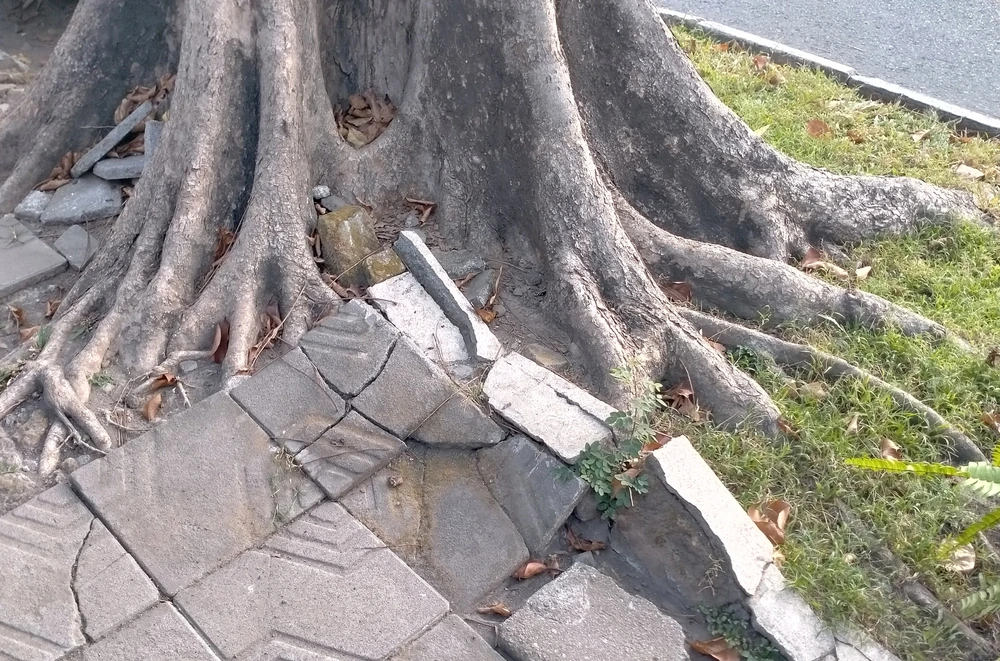
One of the clearest indicators is a section of path or driveway that has risen compared with the surrounding surface. This often appears as a distinct hump running roughly in line with a nearby tree trunk or radiating out from it.
Concrete slabs or pavers may look as if they have been gently prised upward. The lifted area can be a few millimetres at first, then progress to several centimetres. In grassed edges, there is often a noticeable ridge where roots are pushing up from beneath. On driveways, pay attention to areas where vehicle tyres suddenly bump or drop rather than running smoothly as they once did.
Cracks caused by tree roots tend to follow recognisable patterns. Instead of random fine hairline cracking from age or shrinkage, root-related cracks are usually wider, more irregular and often follow a curved or meandering line that reflects the path of a root beneath. Look for:
On paved or brick surfaces, joint lines may widen unevenly with some pavers tilting or rocking underfoot. If the joint opens predominantly on the tree side and closes again away from the tree root, growth is likely driving the movement.
Tree roots are naturally drawn to moisture, making drains and underground pipes a prime target. When roots find small cracks or joints in pipes, they can force their way in and gradually cause blockages, leaks or structural failure. Identifying early warning signs around a property helps limit damage and the cost of repairs.
Some symptoms are obvious, such as frequent drain backups, while others are more subtle, like lush patches of lawn following the line of a buried pipe. Paying attention to changes in drainage performance and ground conditions is essential when trees are located near service lines.
One of the clearest indicators of root intrusion is a change in how indoor or outdoor drains perform. Pipes affected by roots often show a pattern of recurring problems rather than a single one-off issue.
Slow-draining fixtures across multiple locations, such as a toilet, bath and laundry sink, suggest a problem in the main line rather than a local blockage. Gurgling or bubbling sounds from toilets and drains after flushing or when other fixtures are used often indicate trapped air caused by partial blockages from roots and accumulated debris.
A frequent need for plunging or repeated use of drain cleaners that only give short-term relief is another red flag. Chemical cleaners do not remove roots, so if symptoms keep returning, there is a strong chance that roots are restricting flow in the pipe.
When roots crack or displace pipes, wastewater can slowly leak into the surrounding soil. This often creates visible changes at ground level, especially along the route of buried services.
Persistent damp or boggy patches even during dry weather can signal a leaking pipe. A narrow strip of green, dense or fast-growing grass following a straight line away from the house may indicate that roots have opened a pipe and the escaping moisture is fertilising that area.
Slight depressions, sinkholes or uneven paving near known pipe routes are also warning signs. As soil is washed away by leaks or displaced by expanding roots, it can cause paths, driveways and lawns to settle or crack. New cracks in concrete paths or patios directly above where pipes are likely located should not be ignored.
Root-related blockages tend to affect the lowest points of the plumbing system first. Toilets, floor drains or showers on the ground floor or in a basement are usually the first fixtures to back up when the main sewer line is compromised by roots.
If wastewater backs up into a floor drain when a toilet is flushed or a washing machine discharges this often signals a partial obstruction in the main line rather than a simple local clog. In more advanced cases, sewage odours around outside inspection points, garden beds or near the building can indicate that a pipe has been breached and contaminated water is seeping into the soil.
Tree roots rarely break solid masonry on their own, yet their growth and the soil movement they cause can put steady pressure on nearby structures. Over time, this can mean leaning fences, cracked walls and gates or paths that no longer open or sit correctly. Recognising the early warning signs helps prevent minor problems becoming expensive structural repairs.
Visible damage on walls, tilting posts or stiff gates should never be ignored, especially where mature trees or large shrubs stand close to the boundary. The following signs point to root activity rather than simple age or poor construction.
Trees planted close to gardens or retaining walls can alter the soil on one side of the structure. As roots grow and thicken, they displace soil and can create uneven pressure. In clay soils, root-related moisture changes can also cause the ground to shrink or swell, which moves the wall.
Warning signs include long, stepped cracks running along mortar joints, particularly on the side facing the tree. Bulging or bowing of a section of wall towards or away from the tree is another indicator of root influence. Individual bricks or blocks that seem to have shifted outward near ground level may be reacting to roots that have pushed against the footing.
If cracks are wider at the top than the bottom close to a tree, this can show rotation of the wall as the base is slowly pushed. Fresh, sharp-edged cracks rather than weathered old ones are more likely to reflect ongoing movement.
Fences are lighter structures, so they often reveal root problems earlier. Expanding roots can heave concrete post footings or disturb the soil that supports timber posts.
Signs of root impact on fences include posts that are no longer vertical, particularly those nearest to the tree. Concrete around a post may be lifted or fractured with visible roots emerging near the base. Fence panels may appear stepped instead of in a straight line or there may be gaps opening beneath gravel boards or the bottom rail as the ground is raised or depressed.
Where a tree sits directly under a shared boundary fence, roots can grow along the line of the fence and push alternate posts in opposite directions. This creates a wavy or zigzag alignment rather than one clean run. If tightening fixings or replacing a panel does not straighten the fence, the underlying ground movement is likely the real cause.
Root activity often shows up where structures meet the ground. Gates that once swung freely may start catching on the ground, or the latch may stop lining up with the keep. This can occur when a gatepost is lifted by roots or when adjacent paving has been heaved upward.
On patios, drives and paths look for individual slabs that have risen or dropped near tree trunks or large surface roots. Trip lips where one slab edge is noticeably higher than the next often result from roots growing underneath. Retaining walls that support raised beds around tree bases are particularly vulnerable to cracking as roots expand behind them.
Regularly checking these features for new or worsening distortion helps identify root-related problems early so that tree management and structural repairs can be planned together rather than in isolation.
Many problems that appear to be caused by aggressive tree roots actually come from unrelated issues. Misreading these signs can lead to unnecessary root cutting or even tree removal, which can create larger safety and property risks. Understanding what commonly mimics tree root damage helps ensure the right problem is fixed with the right solution.
Before blaming roots for cracks, heaving or dampness, it is important to consider the age of the structure, the quality of construction and recent changes around the property. Often, the timing and location of the problem provide better clues than the presence of a nearby tree alone.
Cracks in foundations, driveways and patios are often attributed to nearby trees when the real cause is normal settlement or ageing materials. Concrete naturally shrinks as it cures and can develop hairline cracking even in areas with no vegetation. Older homes and sidewalks typically experience:
These issues tend to be widespread or follow construction joints rather than radiating from a specific tree or root line. If cracks occur evenly across a slab or match known joints in the concrete, this usually indicates structural ageing rather than localised root pressure.
Water problems are frequently blamed on roots when the underlying issue is drainage. Saturated or poorly drained soils can shift dramatically, causing movement that looks very similar to root lifting. Common non-root causes include:
These conditions can create tilted slabs, uneven floors and gaps near foundations, even where no roots are present. A camera inspection of drains or a simple check of surface grading identifies the real source of movement far more reliably than visual guesses about root activity.
Defective installation of hard surfaces or underground services often shows up as cracking or lifting that conveniently coincides with nearby trees. It is easy to assume a root is pushing when the truth is that the surface was never properly supported. Examples include:
A correct diagnosis typically combines visual inspection with knowledge of building practices, soil type and site history rather than relying solely on the presence of nearby roots.
When signs of root damage appear, it is important to act methodically rather than rush into cutting roots or removing trees. The right steps can protect buildings and paved areas while preserving valuable trees whenever possible. Begin with a calm assessment of the problem, look for patterns and document what is happening. The more accurate the information, the better the outcome when professionals become involved.
Walk the entire property slowly and note every symptom that might be related to roots. Look for cracked or lifting concrete, heaving pavers, sunken soil near foundations or persistent damp areas along a footing or wall. Inside the structure, pay attention to new cracks in drywall, sticking doors or windows and uneven floors.
Photograph each area from several angles and write down when the issue was first noticed and whether it is getting worse. Include information about the age and species of nearby trees and how close they are to the affected structure. This record helps distinguish gradual settlement or age-related wear from active root interference.
Avoid digging aggressively around suspected roots at this stage. Shallow, careful scraping with a hand trowel is acceptable to confirm the presence of roots, but larger excavation can damage roots and destabilise the tree.
Root-related damage can resemble other structural or plumbing problems. Before assuming roots are the cause, consider other possibilities.
Cracked foundations can result from poor drainage, soil shrinkage or construction defects. Similarly, blocked drains may be due to pipe-age corrosion or poor installation rather than roots alone. If there is active water leakage, a licensed plumber should inspect the system with a camera to confirm whether roots penetrate the line or if a broken or collapsed pipe is attracting them.
For concrete or asphalt lifting, compare the location of cracks with the position and direction of major surface roots. Random cracking far from any tree is more likely a general settlement. Concentrated lifting that closely follows a root line is more suggestive of root pressure.
After immediate hazards are addressed, consider how to prevent the problem from recurring. Options may include installing root barriers between trees and hardscape, improving drainage, relocating small structures or removing and replacing a problematic tree with a more suitable species planted at a safer distance.
A coordinated plan that addresses both the tree and the structure gives the best chance of protecting the property while maintaining a healthy landscape.
Tree root-related damage rarely occurs in isolation. Cracked foundations, lifting driveways, uneven paving, persistent damp areas, drainage issues and structural movement are often connected through underlying root activity that alters soil conditions and places pressure on surrounding structures. Recognising these signs early and interpreting them accurately is critical to avoiding unnecessary repairs or delayed intervention. Timely assessment by qualified professionals, combined with appropriate root management and long-term planning, helps maintain structural integrity while preserving the health and stability of surrounding vegetation.


