Preventing yuccas from returning after removal requires far more than cutting down the visible stems. Beneath the surface, these plants develop deep, energy-storing root systems capable of producing new shoots long after the original plant appears gone. At Lance’s Tree Care, hands-on experience with stubborn yuccas and complex tree removal in Tamborine Mountain has shown that lasting control starts with understanding how these plants regenerate and which removal methods stop that cycle.
This article explores how yucca roots behave below ground, why regrowth is so persistent and which strategies are most effective for stopping repeat shoots before they spread further through the landscape. It also explains the practical side of yucca control, including what drives regrowth, why incomplete removal often fails and when professional help may be needed.
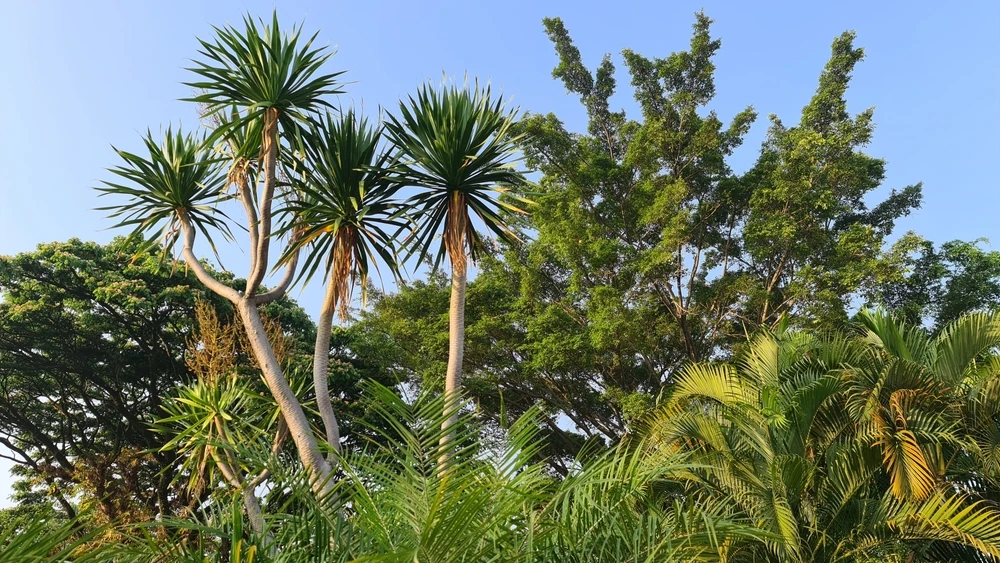
Yuccas are notorious for returning even after heavy pruning or complete removal at ground level. Cutting the visible stems only removes the top growth while leaving a living root system behind. If that underground structure remains active, the plant can continue pushing up new shoots from the crown, roots or buried stem sections.
Unlike many shrubs that decline once the trunk is removed, yuccas store energy below ground and respond strongly to damage. What appears to be a successful removal can quickly turn into a cluster of fresh shoots if the main growth points are left in the soil.
The primary reason yuccas come back is their strong root structure. Many landscape yuccas develop a deep central root and thick lateral roots that can extend well beyond the original planting hole.
These roots store reserves of carbohydrates and moisture. When the top of the plant is cut away, those stored reserves feed dormant buds underground and around the crown. Within weeks or months, new shoots may appear near the old stump or even at some distance from where the main stem was removed.
If roots are only partially removed or broken into sections, viable pieces may continue producing new growth. This is why simple digging around the base rarely solves the problem and why regrowth can seem to appear unexpectedly in nearby garden beds or lawns.
Yuccas can reshoot from more than one point. The plant commonly has growth buds around the crown, where the stem meets the roots, as well as dormant buds along thick roots that may activate after the plant is damaged.
When the above-ground growth is removed, these buds are triggered as a survival response. Instead of one main stem returning, the plant may produce several smaller shoots, creating a denser and harder-to-manage clump.
Unless the crown and key root sections are removed or properly treated, the plant often treats cutting as pruning rather than removal. This regenerative ability is why cutting a yucca flush with the ground rarely provides long-term control.
Many yuccas are planted in awkward positions, such as close to fences, driveways, retaining walls, garden edging or utility lines. When removal is attempted in these tight spaces, only the visible trunk and part of the root ball are often taken out. Remaining root sections can continue to live and reshoot.
In some cases, repeated topping or cutting back without addressing the roots can make the problem worse. Each regrowth cycle can create more stems, a wider base and a stronger underground structure, making later removal more difficult.
Chemical treatments can also fail if they are applied only to the leaves, used at the wrong time or washed off before being absorbed. If the treatment does not reach the root system, the plant may survive underground and return once growing conditions improve.
Stopping a yucca from growing back requires targeting the parts of the plant that store energy and produce new shoots. Cutting the top growth alone does not interrupt the plant’s ability to regenerate. Effective removal must focus below ground.
Yuccas commonly regenerate from the root crown and from thick, fleshy roots that extend outward from the base. These roots may send up new shoots some distance from the original stem. Long-term control depends on removing the main crown first, then removing as much of the surrounding root system as site access allows.
The most important part to remove is the root crown. This is the woody, swollen area where the above-ground stem joins the main roots.
The crown acts as the plant’s central growth point. It stores energy and contains dormant buds that can quickly produce new stems once the top has been cut. Leaving even part of this crown in the soil often results in several smaller yuccas emerging around the old site.
Removal should focus on:
If the crown cannot be removed whole, it should be cut into manageable sections and every piece taken out. Any fragment left in contact with live root tissue can potentially support new growth.
Beyond the crown, yuccas produce thick horizontal roots that travel outward through the soil. These lateral roots can produce new shoots at different points along their length, particularly when disturbed or cut.
To reduce the chance of regrowth, removal should focus on:
Fine fibrous roots are less important for regrowth. The priority is removing the thicker, cord-like roots that are firm, starchy and about the width of a pencil or larger.
Where yuccas have been cut back repeatedly, multiple stumps can form at or just below ground level. These partially buried stems may behave like additional crowns and push up new growth even after the main trunk has been removed.
Soil should be scraped back several centimetres below the original ground level to locate old cut stubs, woody nodules and buried stem sections connected to the root system. These pieces need to be cut out cleanly and lifted with as much attached tissue as possible.
Leaving woody stump tissue in place usually results in repeat sprouting from the same area. This is one reason yucca removal often requires more than a quick surface-level cut.
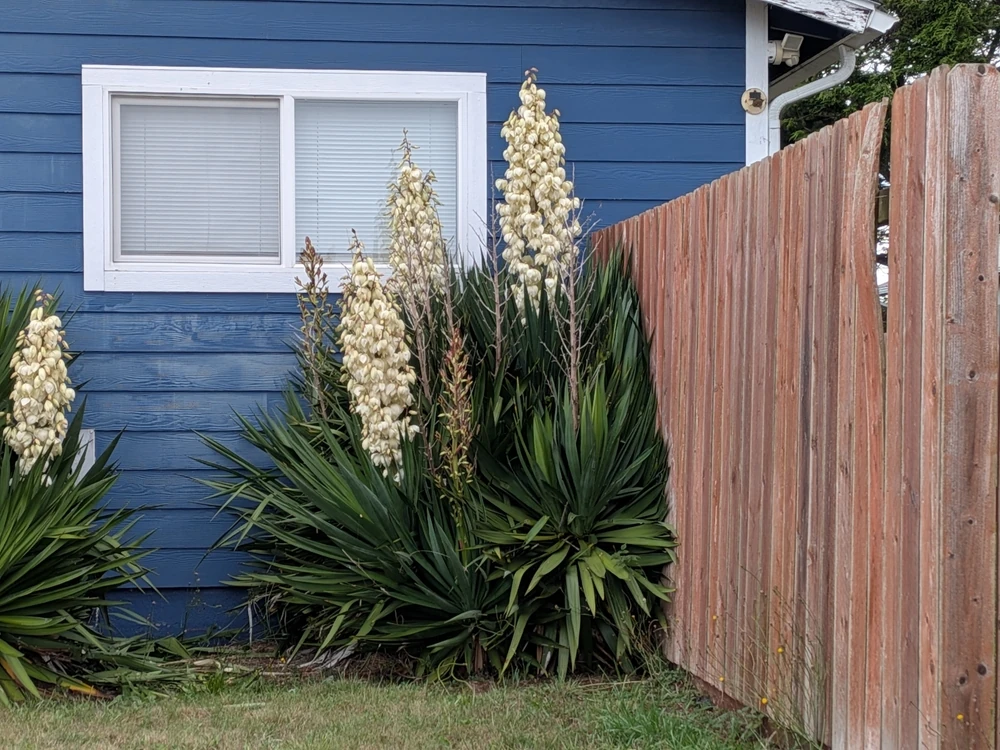
The visible foliage is only part of the problem with yucca removal. The harder work is usually below ground, where the plant’s roots and stump tissue are tough, fibrous and built to survive harsh conditions.
This is where many removal attempts fail. The plant may look gone from the surface, but small sections of crown, stump or thick root can remain viable in the soil. Once those sections recover, they can begin producing new shoots.
Yucca stumps are dense and fibrous, which makes them difficult to break apart with ordinary garden tools. They do not usually collapse or rot away quickly after cutting. Instead, the stump tissue can remain firm for a long period and continue supporting new growth.
This durability means cutting the plant down is only the first stage of the job. Unless the stump and crown are removed or treated properly, the underground tissue may keep reshooting year after year.
Yuccas can also be difficult to remove because their roots break easily when dug out. A spade may cut through thicker roots rather than lifting them whole. Each broken section left in the soil increases the chance of regrowth.
This is especially common in compacted soil, rocky ground or narrow garden beds where there is not enough space to dig around the plant properly. In these situations, removal takes patience because the roots need to be followed carefully rather than simply chopped through.
Many yuccas are planted in areas where full excavation is difficult. They may be growing near fences, paths, retaining walls, driveways, buildings, irrigation systems or underground services. These conditions limit how aggressively the roots can be dug out.
In restricted spaces, the safest approach may involve staged removal, careful hand digging and targeted treatment of remaining root sections. Digging too forcefully can damage nearby structures or services, while shallow removal leaves the plant with enough tissue to regrow.
Regrowth after yucca removal is common. New shoots usually mean live root sections are still in the ground, using stored energy to produce fresh foliage. The aim is to stop that foliage from feeding the roots and to gradually exhaust the remaining underground reserves.
Returning shoots should be dealt with quickly. Leaving them to grow only allows the plant to photosynthesise, rebuild energy and strengthen the root system again.
As soon as new yucca shoots appear, they should be removed at or just below ground level. Cutting them high leaves more leaf surface behind and gives the plant a better chance of continuing to feed itself.
Use clean, sharp loppers or a pruning saw to cut shoots as close to the soil line as possible. If the soil is loose and access allows, scrape back an extra 2 to 5 cm of soil and cut below the base of the shoot. This reduces the chance of that same shoot point resprouting.
This process needs to be repeated every time foliage appears. Each prompt removal forces the plant to use more stored energy without giving it the opportunity to recharge.
If shoots keep appearing in the same area, a parent root or crown fragment is usually still active. Carefully exposing more of the root can improve control.
Loosen soil with a hand fork where possible to reduce unnecessary root breakage. Follow each shoot back to the thicker root it emerges from, then remove as much of that root section as safely and practically possible. Any roots with green tissue or active shoots should be disposed of rather than composted, as some pieces may re-establish in suitable conditions.
Where complete removal is not possible, targeted treatment may be considered. This can involve drilling small holes into exposed stump or root tissue and applying an appropriate stump control product according to the label instructions. Direct application to fresh cuts or drilled tissue is generally more effective than broad spraying and helps reduce the risk of affecting nearby plants.
Yucca roots can remain dormant before sending up shoots months after apparent success. Ongoing monitoring is often needed to achieve long-term control.
Keep the area around the old yucca base clear enough that new shoots can be seen early. For at least one full growing season, inspect the site regularly and remove any regrowth straight away. In warm, favourable conditions, persistent clumps may need to be monitored for longer.
Where roots are intertwined with valuable plants, manual removal and repeated cutting may be safer than chemical treatment. In more open areas, carefully directed cut-stump treatment may help speed up suppression when used correctly.
Yucca can be deceptively difficult to remove. Cutting the canes or digging out the visible roots may look like a complete job, yet new shoots can appear weeks or months later. Persistent regrowth is usually a sign that the underground structure is more extensive than expected.
Professional removal is often worthwhile when the plant is large, well established, close to structures or repeatedly returning after previous attempts. A more methodical approach can reduce soil disturbance, limit damage to the surrounding garden and improve the chances of long-term control.
Mature yucca stands with multiple trunks or a wide base are difficult to eliminate fully by hand. Their root systems can extend well beyond the visible foliage, forming a dense network of thick roots that ordinary garden tools may not remove completely.
Larger plants often require a staged approach. The main stems may need to be cut down first, followed by excavation around the crown and removal of the major root sections. Where access and site conditions allow, specialist digging tools, mattocks, trenching shovels or compact excavation equipment may be used to expose the central crown and lateral roots.
For old or spreading yuccas, this deeper removal process is often the best way to reduce the chance of repeat shoots returning year after year.
Yuccas growing close to houses, fences, driveways, paved areas, retaining walls or underground services require extra care. Aggressive digging in these areas can cause damage that is more costly than the original plant problem.
Professional help is especially valuable when the yucca is:
In these situations, the removal method needs to balance plant control with site protection. This may involve careful hand excavation near sensitive areas, sectional removal of the crown or targeted treatment of remaining roots where physical removal is not practical.
Preventing yuccas from growing back after removal depends on addressing the underground parts of the plant, not just the visible stems. The root crown, thick lateral roots and any remaining stump tissue can all support new shoots if left in the soil.
Lasting control usually requires thorough removal, careful follow-up and quick action when regrowth appears. In difficult sites, professional yucca removal can help reduce repeated disturbance to the garden while improving the chances of long-term suppression. By treating yucca removal as a staged and methodical process, it becomes much easier to restore planting areas and prevent the same plant from returning season after season.


