Removing a problem tree can give a landscape a fresh start, but planting a new tree in the same spot is not always as simple as filling the old stump hole. Leftover roots, wood chips, soil changes and potential disease can all affect whether a replacement tree establishes successfully.
After tree removal in Tamborine Mountain, the condition of the ground can determine whether the original planting location is suitable. Proper preparation and allowing the soil to settle can help create better conditions for new roots and reduce problems as the tree grows.
Lance's Tree Care can assess the area after stump grinding and advise whether replanting in the same spot is practical or whether a nearby location would be more suitable. Removing excess debris, managing old roots and preparing the soil properly can give the replacement tree a healthier foundation for long-term growth.
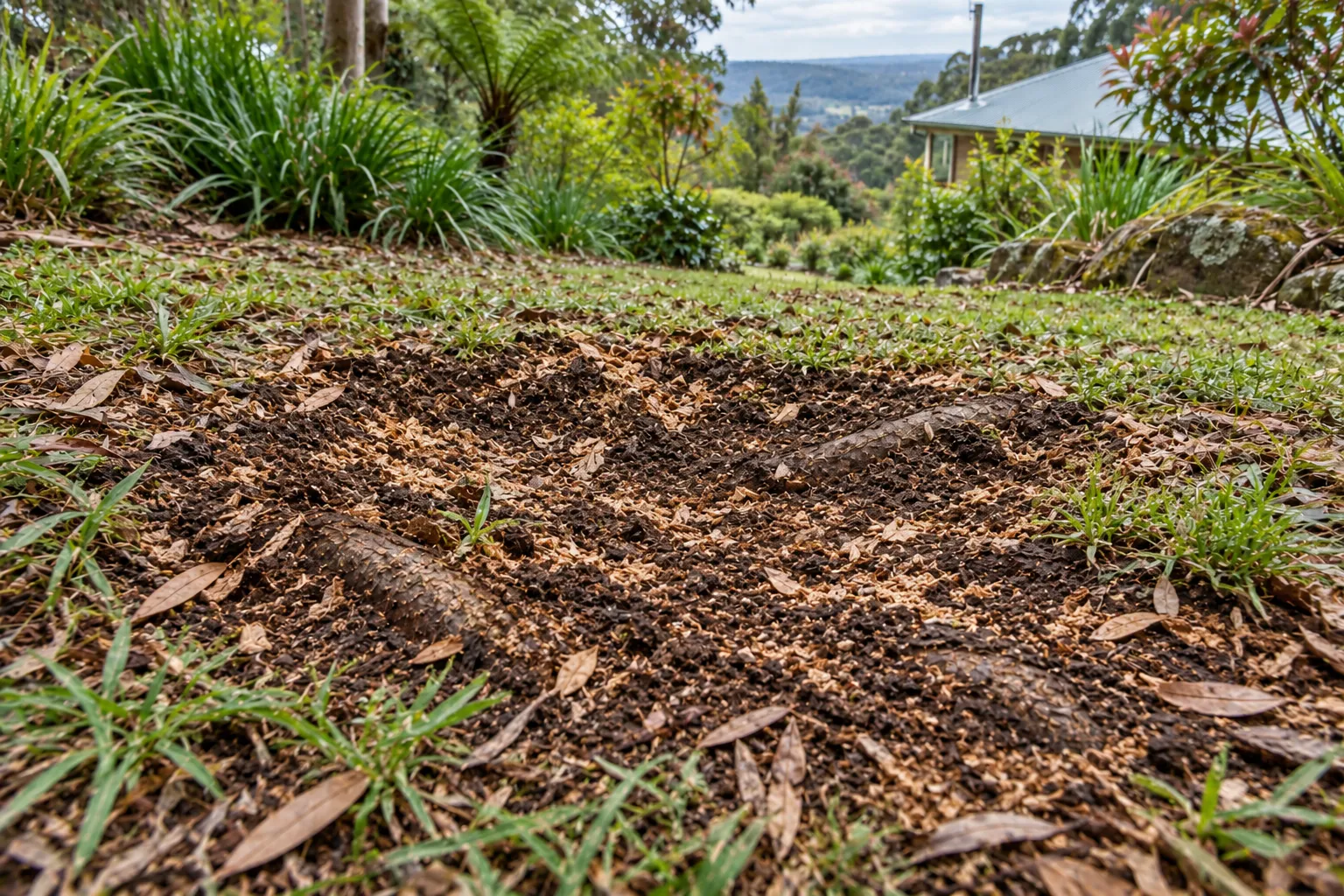
After professional stump grinding, the ground is not immediately ready for new planting. The process leaves a shallow cavity containing wood chips, soil and parts of the old root system. As this material breaks down and settles, it can affect the soil structure, moisture levels and nutrient availability around the former stump site.
These changes can make it harder for a new tree to establish directly in the same location. Checking the condition of the ground and removing excess grinding debris are important steps before replanting.
Stump grinding commonly removes the stump to around 15 to 30 centimetres below ground level, although the depth can vary with the equipment and site. This leaves a cavity that is often filled with shredded wood chips mixed with soil.
Because this material is loose, it can compact and settle as the wood decomposes. Deep layers of grindings may also retain moisture after rain, while decomposing roots can leave small voids in the soil. Together, these changes can create uneven or poorly drained conditions for new roots.
A freshly ground stump site can contain more woody material than is visible at the surface. Large roots, thick layers of grindings and soft areas may need to be removed before a new tree is planted. Simply raking the surface level may not provide the stable soil structure a young tree needs.
Removing excess chips, replacing unsuitable material with quality soil and allowing the ground to settle can create a more suitable planting zone. If the previous tree was affected by a serious disease or pest problem, the remaining roots and surrounding soil should also be considered before choosing the same location.
Yes, a new tree can sometimes be planted where a stump was ground, but the site needs to be properly prepared first. Remaining roots, wood chips and unsettled soil can make the area less suitable for new root growth if the previous tree was large or mature.
Planting slightly away from the original stump is often a simpler option because it gives the new tree access to less disturbed soil. A distance of around 2 to 6 feet can be a useful starting point for many residential sites, although the ideal position depends on the remaining root system, soil condition and mature size of the replacement tree.
If the exact location must be used, excess grinding debris and large roots should be removed from the planting area where practical, with suitable soil added before planting. Allowing the ground to settle and checking for soft or sinking areas can also provide a more stable foundation.
Local government guidance also highlights the importance of determining whether the original location remains suitable for replanting, as some replacement trees may need to be positioned elsewhere when site conditions are unsuitable.
There is no fixed waiting period after stump grinding. Replanting can take place within a few months once excess debris has been removed, the soil has settled and the planting area is stable. The ideal timing depends on the amount of remaining roots and grindings, soil conditions and the size of the replacement tree.
For planting in the exact stump location, around 3 to 12 months can be a useful general timeframe. Smaller trees and shrubs may be ready sooner if the area has been thoroughly prepared, while large replacement trees may benefit from more time. Planting a few feet away from the original stump can also reduce the need to wait for the most disturbed soil to recover.
Heavy wood chips, extensive roots, poor drainage and dense clay can all slow the site's recovery. Removing excess woody material and correcting unsuitable soil conditions can improve the planting area without relying solely on a longer waiting period.
The ground should feel reasonably firm, with no obvious sinking, soft spots or persistent waterlogging. A test hole should contain mostly suitable soil rather than loose chips or thick mats of old roots. If the area remains unstable or heavily disturbed, waiting longer or choosing a nearby planting location may be more suitable.
Yes, old tree roots can affect a replacement tree, particularly when large roots remain beneath the planting area. As these roots decompose, they can occupy space needed by new roots and leave voids that contribute to soil settlement. Decaying woody material can also affect drainage and moisture around the new root system.
The impact is usually greater when the previous tree was large or mature because its root system is likely to have been more extensive. Removing substantial roots where practical can create a more consistent planting area. If significant roots remain, moving the new tree a few feet away from the original trunk position can provide access to less disturbed soil.
Yes, stump grinding can temporarily change the soil quality around the former stump. Wood chips, shredded roots and disturbed soil can affect nutrient availability, drainage and soil stability as the remaining organic material breaks down. Decomposing wood can also temporarily tie up nitrogen, leaving less available for a newly planted tree.
Fresh woody material mixed through the soil may contribute to nitrogen drawdown as microorganisms use available nutrients while breaking down the wood.
These changes improve as the site settles and the woody material decomposes, but the area may need preparation before replanting. Excess grindings should be removed, while compacted or unstable soil may need to be loosened and improved with suitable soil and a moderate amount of compost.
Yes, most stump grinding debris should be removed before planting a new tree in the same location. Fresh wood chips and shredded roots can settle as they decompose, while a thick layer beneath the root ball can create unstable and inconsistent growing conditions.
Loose chips can be raked away, while chip-heavy material in the planting hole should be removed until suitable soil is reached. Large pieces of wood and substantial roots should also be cleared where practical. Small amounts of organic material can remain outside the main root zone, but fresh grindings should not make up the primary soil around the new tree's roots.
Once excess debris has been removed, the area can be backfilled with suitable soil and allowed to settle before planting. This provides a more stable environment for new root growth.
Preparing a former stump site involves clearing unsuitable material, restoring the soil and creating a stable planting area. A simple process can help give the replacement tree enough clean soil and space for its roots to establish.
Clear loose wood chips from the surface and remove chip-heavy soil from the intended planting area. Large pieces of wood and substantial roots should also be removed where practical, particularly directly beneath the new root ball. Excess grindings can be reused as mulch elsewhere rather than placed back into the planting hole.
Backfill the cleared area with suitable soil that is similar to the surrounding ground. A moderate amount of compost can be incorporated if needed, but the planting area should not become a pocket of different soil. Lightly firm the backfill as it is added to reduce large air gaps without heavily compacting it.
Position the new tree so the root flare sits at or slightly above the finished soil level. Avoid creating a deep depression where water can collect around the trunk. Once planted, a 2- to 3-centimetre layer of mulch can be applied across the root zone while keeping it away from the trunk.
If the former stump was large or the ground continues to settle, the planting area may need to be prepared more widely or the new tree positioned further from the original stump location.
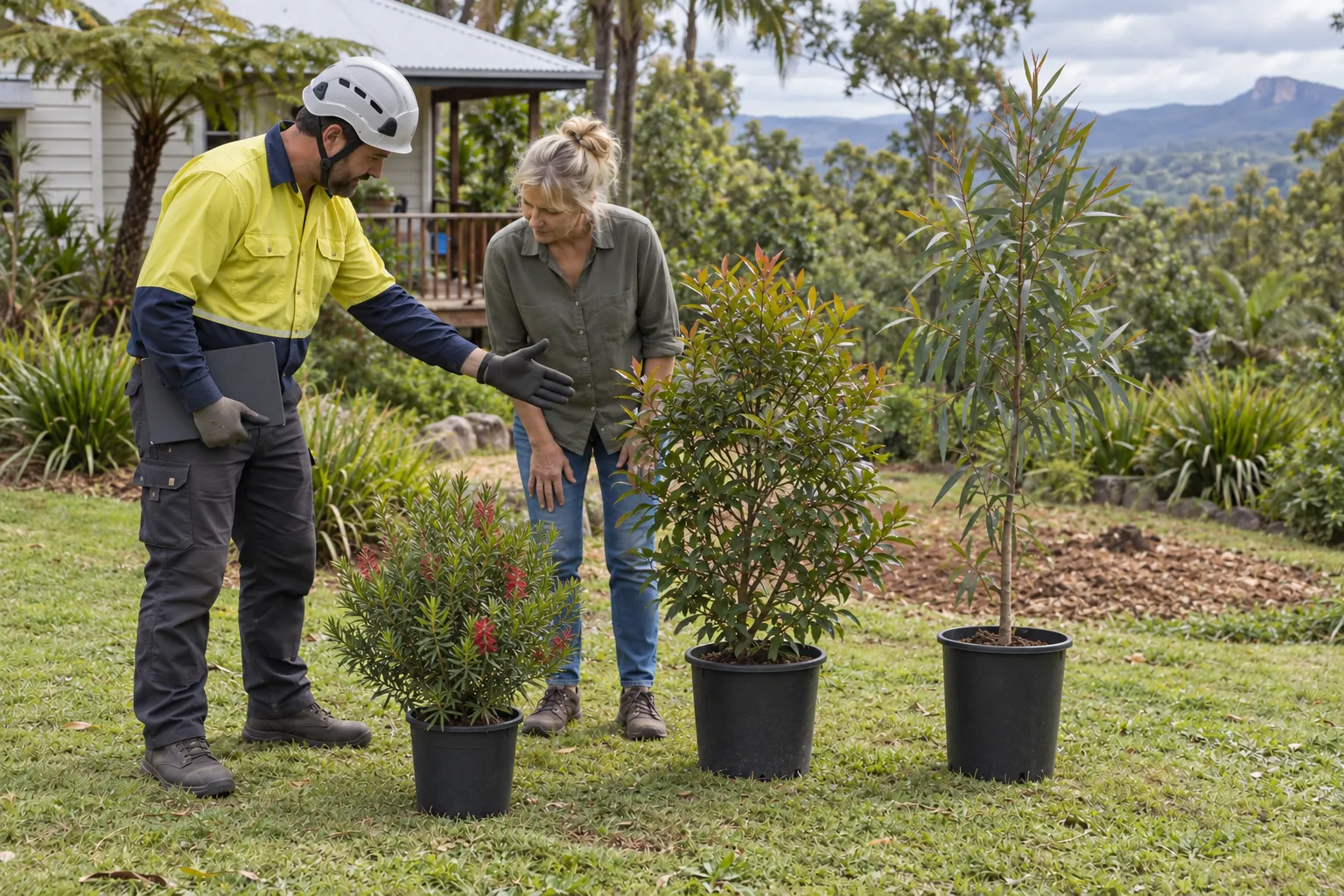
The best tree to plant after stump grinding depends on the condition of the soil, the size of the previous tree and how much of its root system remains underground. A replacement tree should suit the available space and growing conditions rather than simply replacing the old tree with the same species.
The replacement tree should suit the property's soil, drainage, sunlight and available root space. Species that tolerate the site's existing conditions and establish reliably can be easier to grow in a recently disturbed area.
The tree's mature size should also be considered. A species that develops a large canopy and extensive root system may require more space than the former stump location can provide.
The guide to native tree care on Tamborine Mountain provides further information about local growing conditions, root behaviour, spacing and ongoing maintenance.
Smaller ornamental trees and moderately sized species can be practical choices when the original stump was large or the surrounding ground remains disturbed. Their root systems require less space, making them easier to establish once the planting area has been prepared.
A larger tree may still be suitable where there is sufficient clean, well-drained soil and enough room for its mature root system. Moving the planting position slightly can also provide access to less disturbed ground.
If the previous tree was removed because of a disease or pest problem, planting the same species in the exact location may not be appropriate. Depending on the issue, affected roots, woody material or surrounding soil may continue to create conditions that are unsuitable for another tree of the same type.
A different species may be a more suitable replacement where the previous tree had a known disease or recurring pest issue. Where the cause of the tree's decline is uncertain, an arborist can assess the site and help determine suitable planting options.
A new tree can often be planted around 2 to 6 feet from the old stump rather than directly over the former trunk position. This gives the new root ball access to less disturbed soil and reduces the chance of encountering large roots, wood chips or areas that are still settling. The exact distance depends on the size of the old tree and the condition of the surrounding ground.
For a smaller tree with limited remaining roots, 2 to 3 feet may provide enough separation. A larger or older tree may require more space if substantial roots or disturbed soil extend beyond the original stump. The mature size of the replacement tree should also be considered, as larger trees need more room for their roots to develop.
Rather than relying on a fixed measurement, the proposed planting area should be checked for firm, suitable soil and remaining woody material. If the ground is still heavily disturbed, moving the tree further away may provide better growing conditions. The new location should also leave enough space for the tree's mature roots and canopy.
Providing adequate space from paving, drainage lines and structures can also reduce the likelihood of future problems, although property owners should understand the signs tree roots are causing property damage as the replacement tree matures.
A different planting location can be a better option when the former stump site remains heavily disturbed or does not provide suitable conditions for healthy root growth. Moving the new tree can also avoid extensive soil removal and give it access to stable, well-drained ground from the start.
If the previous tree was large or mature, substantial roots may extend well beyond the old stump. When test digging reveals thick roots, heavy grindings or unstable soil across a wide area, planting elsewhere can provide a cleaner and more stable root zone.
A different location may be preferable if the previous tree was removed because of a serious disease or pest issue. Depending on the problem, remaining roots and woody material may affect a replacement tree if the same or a related species is planted nearby.
Poor drainage, heavy clay, ongoing settlement, limited sunlight or restricted root space can make the former stump area unsuitable regardless of how much preparation is done. Another part of the property may provide better conditions without requiring extensive soil remediation.
When the original site remains difficult to restore, choosing another location can be a practical alternative. The new area should still be checked for suitable soil, drainage, underground services and enough space for the tree's mature roots and canopy.
Planting a new tree where a stump was ground out is possible, but success depends on more than simply filling the old hole. Removing excess wood chips and roots, improving the soil, allowing the ground to settle and choosing a suitable species can all help create better conditions for healthy root development. Moving the new tree slightly can provide a more stable planting area.
Lance's Tree Care can assess the condition of the site and determine whether replanting in the same location is suitable. With proper preparation and planting techniques, the former stump area can become a suitable space for new growth and long-term landscape value.


