Lance's Tree Care has seen first-hand how improper structure, weak limbs and neglected growth can turn even a healthy tree into a serious hazard in severe weather, which is why professional tree pruning in Tamborine Mountain is essential in high-wind environments.
Readers will learn how specific pruning techniques help trees flex rather than fail in storms, how to identify structural weaknesses before they become dangerous and when it is time to call in a qualified arborist. will also highlight the differences between safe canopy thinning and harmful over pruning, how species selection and placement influence storm resilience and why regular maintenance is more effective and economical than emergency storm cleanup. By understanding the principles behind proper pruning, property owners can make informed decisions that protect their investment, increase safety around buildings, vehicles and walkways and support the long-term health and stability of their trees in high-wind environments.
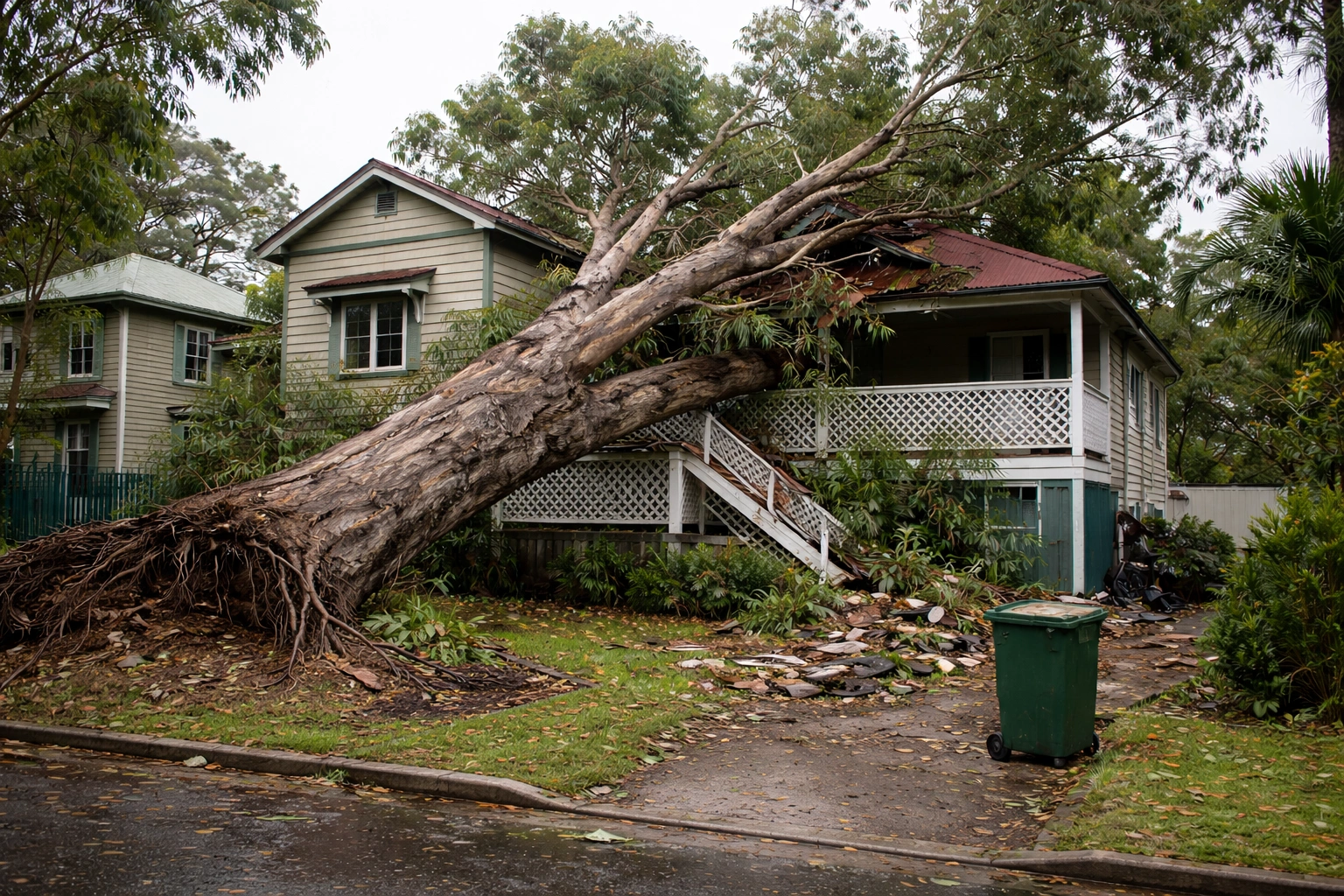
Trees may look strong and permanent, yet their structure and growing conditions can make them surprisingly vulnerable in high winds. Understanding exactly why trees fail helps homeowners see which trees are at risk and why proper pruning and care make such a difference before storms arrive.
When wind speeds rise, branches act like levers and roots act like anchors. If the crown is too dense, the roots are weak or the trunk has hidden defects, the tree can split, uproot or shed large limbs that cause property damage or injury.
Many storm failures start with the way a tree has grown. Co-dominant stems are a common problem. These are two or more main trunks of similar size that rise from the same point. They often form tight V-shaped crotches where bark is trapped between the stems. This included bark prevents strong wood from forming and creates a natural crack line. In strong wind one of these stems can shear off at the junction.
Poor branch attachments are another risk. Branches that join the trunk at very sharp angles or with visible cracks or seams are more likely to fail. Crossing or rubbing branches create wounds that invite decay.
Over time rot can hollow out a portion of the limb or trunk so it can no longer carry the load of heavy wind.
Internal decay is especially dangerous because it is often hidden. Fungi entering through improper cuts, broken branches or lawn mower damage at the base can slowly weaken the heartwood. Outward signs such as mushrooms on the trunk, cavities, oozing sap or dead sections of bark can indicate a structurally compromised tree that is far more likely to break in a storm.
Even a healthy-looking tree can be unstable if its root system is limited or damaged. In high-wind areas shallow or restricted roots are a leading cause of trees uprooting.
Roots may be confined by sidewalks, driveways, foundations or compacted construction fill. In these conditions roots cannot spread widely to anchor the tree. Saturated soil increases the risk further. After heavy rain or in poorly drained yards, the soil loses strength and trees can topple more easily because the roots cannot grip as firmly.
Root rot from chronic overwatering, poor drainage or old planting holes filled with water can also undermine stability. Construction damage such as trenching for utilities or cutting roots near the base of the tree often goes unnoticed yet can permanently weaken one side of the root system. In a storm the tree may tilt or uproot towards the damaged side.
The size and shape of the canopy directly affect how much wind force a tree must withstand. A very dense crown catches more wind like a sail. When branches are crowded, the wind cannot pass through, so pressure builds and stresses limbs and the trunk.
Long, unpruned limbs that extend far from the trunk create extra leverage in strong gusts. The farther out the weight is, the more force is applied at the branch union. Weak or decayed unions can snap suddenly even if the branch looked fine before the storm.
Species characteristics also matter. Some species naturally have brittle wood or heavy limbs that are more prone to break in high winds. Others hold dense foliage year-round, so they are exposed in every storm. Without regular structural pruning, even otherwise healthy trees can become hazardous because of how they catch and transfer wind loads.
Proper pruning changes how a tree carries wind so it is less likely to lose limbs or fail at the trunk or roots during a storm. By removing weak or poorly attached branches and reducing excess weight at the canopy edges, professional arborists can help trees move with the wind instead of breaking under it.
In high‑wind areas, the goal is not to make trees smaller but to make their structure stronger and more balanced. Targeted pruning reduces the leverage on heavy limbs, improves branch spacing and keeps the canopy healthy so trees are better able to withstand repeated storm events.
A dense, top‑heavy canopy acts like a sail. When strong winds hit, pressure builds in the outer branches and at weak attachment points. Structural pruning opens the canopy so air can pass through more easily and weight is distributed closer to the trunk.
Arborists thin select interior branches, especially crossing or rubbing limbs, to reduce overall wind resistance while keeping enough foliage for tree health. They also shorten or reduce long, overextended limbs that reach far from the trunk. These long limbs act as levers in a storm and are far more likely to split or snap. By shortening them back to strong lateral branches, our team lowers the bending force and reduces the chance of breakage.
Many storm failures start where a branch connects to the trunk. Tight, V‑shaped crotches and included bark are common weak points. Through structural pruning, qualified arborists focus on developing strong U‑shaped attachments and a clear central leader, especially in younger and mid‑aged trees.
This often involves:
By addressing these defects before a storm, pruning prevents small structural problems from turning into major failures that can damage homes, vehicles or utility lines.
Branches that extend over roofs, driveways or power lines are at higher risk in high‑wind conditions. Pruning lets the company manage that risk by reducing weight and correcting direction of growth without topping or harsh cutting.
Reduction cuts are used to shorten branches back to healthy side branches, which keeps the natural form of the tree while taking stress off the limb and its attachment. Selective removal of heavy end‑weight also helps prevent limb drop, where an otherwise healthy branch fails because the outer portion is simply too heavy in strong winds.
In some cases, professional arborists may recommend removing specific limbs that are inherently hazardous, such as large branches with decay or those that are growing against structures. Careful pruning around these targets focuses the tree’s growth into safer directions and lowers the likelihood of storm‑related property damage.
Pruning in high-wind areas is about shaping stronger trees that can move with the wind instead of breaking under it. The right methods and timing reduce the chances of uprooting, snapped trunks and large falling limbs that can damage homes, vehicles or power lines.
Qualified arborists focus on structural pruning that creates a balanced, wind-resistant canopy. This involves removing or shortening specific limbs rather than simply thinning the tree. Proper timing limits stress on the tree and helps it recover quickly so it can handle the next storm season.
For young and mature trees, the goal is a single dominant leader and well-spaced branches with strong attachment angles.
Structural and safety-focused methods typically include:
Crown reduction pruning is sometimes used where a tree has grown too large for its site. This means selectively shortening the height or spread by cutting back to smaller lateral branches that are at least one-third the diameter of the parent limb. Many professional arborists avoid topping because it creates weak, fast-growing sprouts that are highly vulnerable to wind.
Subordination pruning is important for multi-leader or co-dominant stems. Instead of removing a large competing stem outright, the team often reduces it gradually over several pruning cycles to shift strength to a single main leader and reduce the risk of splitting.
In windy areas it might seem logical to remove a large number of branches to let wind pass through the canopy. However, over-thinning can actually increase the risk of failure. Removing too much foliage shifts wind load onto fewer remaining branches and often stimulates long, weak regrowth that is more vulnerable in future storms.
Best practice focuses on:
For some species, reducing the length of overextended limbs is more effective than removing large amounts of interior growth. Shorter, well-supported branches catch less wind and place less leverage on the trunk and root system, improving overall stability.
Good timing reduces stress and maximises the tree's ability to seal pruning cuts before severe weather. In many regions the best time for structural and preventive storm pruning is late winter or very early spring before new growth starts. Trees are dormant, insect and disease activity is lower and the tree can direct energy into wound closure as it begins to grow.
Some guidelines many qualified arborists often follow:
Species and local climate affect ideal timing, so many qualified arborists evaluate each tree and site rather than using a single calendar date for all work.
In high-wind environments, storm resilience is never accidental. It is the result of consistent, well-planned maintenance and pruning carried out with a clear structural objective. When trees are assessed regularly and pruned to improve branch attachment, canopy balance and weight distribution, they are far better equipped to handle strong winds without failing.
Strategic thinning, selective crown reduction where appropriate and the removal of weak, decayed or poorly attached limbs all contribute to a stronger, more stable canopy. Early structural training of young trees further reduces the risk of codominant stems and future splitting, while ongoing monitoring of root health and soil conditions helps address hidden stability issues before they become serious hazards.
While no tree can be made completely storm-proof, a proactive pruning plan significantly lowers the likelihood of property damage, costly emergency work and safety risks. With informed care and professional assessment, trees remain valuable landscape assets rather than liabilities when severe weather arrives.


