Tree lopping is often promoted as a quick fix for overgrown or hazardous trees, yet it is widely regarded as one of the most damaging pruning practices a property owner can choose. At Lance's Tree Care, we regularly see the long-term consequences of incorrect lopping practices, including weakened tree structure, severe regrowth problems, soil stress and avoidable property damage. This article explores how improper cutting methods affect tree health, why soil and root systems can suffer after aggressive lopping and how hidden risks can emerge long after the work is done.
Readers will learn how tree lopping in Tamborine Mountain differs from proper pruning, why it can increase the likelihood of branch failure and decay and how it may actually create more dangerous trees around homes and businesses. The discussion also looks at the financial impact of poor work, from higher maintenance costs to reduced property value, along with the safety and legal risks that can come with unsafe or non-compliant practices. By understanding these issues, property owners can make informed decisions about tree care, protect their landscape investment and know when to call qualified professionals for safer and more effective alternatives to lopping.
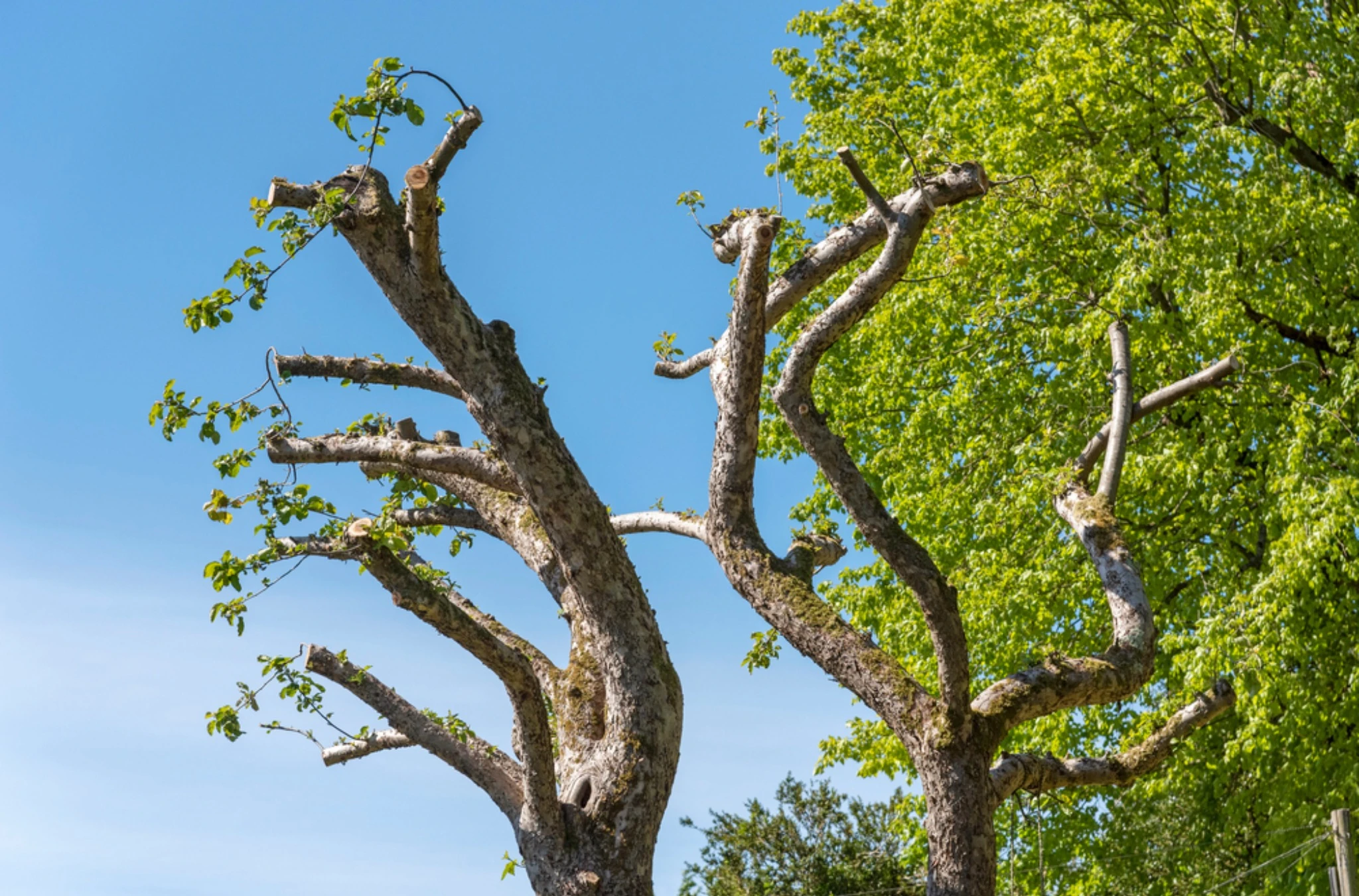
Tree lopping involves cutting back major limbs or the upper canopy without the careful planning used in proper pruning. Instead of selecting branches to support long-term structure, balance and tree health, lopping usually focuses on rapid size reduction with little regard for how the tree is likely to respond.
Understanding what tree lopping actually involves helps homeowners see why it differs so much from proper pruning and why it often creates ongoing problems for trees, soil and surrounding structures.
Tree lopping usually means cutting back the main branches or top of the tree to drastically reduce height or spread. Loppers commonly make large heading cuts anywhere along a branch, rather than at a natural junction or near the branch collar, which is the slightly swollen area where a branch joins a larger limb or trunk.
In practice this often looks like:
These cuts remove a high percentage of the foliage in a single visit. The tree loses much of its ability to produce energy through photosynthesis, which places it under significant stress. Unlike structural pruning, which targets specific branches with a clear purpose, lopping focuses on quick clearance and dramatic visual change.
Lopping almost always leaves behind stubby branches with no natural end point. These stubs are not how trees are designed to seal and manage pruning wounds, so they often struggle to close over the cut surface properly.
Each large stub can become:
A lopped tree typically responds with a flush of fast, vertical shoots from around the cut sites. This regrowth is often described as epicormic growth, which is fast, weak regrowth produced in response to stress. It can look dense and leafy quite quickly, which may give a false sense of recovery.
However, these shoots often:
To keep a lopped tree at the desired size, the property owner usually ends up needing repeated heavy cutting every few years. Each cycle adds more wounds and more weak regrowth, which can cost more over the life of the tree than correct pruning or removal from the start.
Incorrect tree lopping is more than a cosmetic issue. When too much canopy is removed or cuts are made in the wrong place, the tree’s natural systems are disrupted, which can lead to poor health, structural weakness and in many cases a shorter lifespan. People often expect lopped trees to bounce back, but the damage is often long-term and sometimes irreversible.
Qualified arborists frequently see the hidden consequences of past lopping work. Problems often show up years later as decay, internal cracking, dieback and dangerous limb failure. Understanding how and why this happens helps property owners avoid practices that quietly destroy their trees.
When a tree is lopped, a very high percentage of its leaf area is suddenly removed. Leaves are the tree’s food factory, so heavy canopy loss severely reduces the tree’s ability to produce energy. The tree is then forced to use stored reserves in the trunk and roots simply to survive.
This energy shock can contribute to:
Instead of producing stable new branches, the tree often responds with a flush of thin shoots called epicormic growth. These shoots are a stress response rather than healthy structural regrowth and they come with serious attachment problems.
Lopping cuts are usually made across large-diameter limbs rather than at natural branch junctions. New shoots that form below these cuts are attached mainly to the outer layers of wood rather than being integrated into the branch structure. As they grow heavier, they are much more likely to tear out under wind or the weight of wet foliage.
This weak attachment is a major reason lopped trees can become more hazardous than before. What looks like dense new foliage may hide:
The result can be a greater chance of major limb failure over driveways, homes and play areas, even if the tree appears smaller and safer to an untrained eye.
Correct pruning uses smaller targeted cuts that the tree has a better chance of sealing over. Lopping leaves large open wounds which many species struggle to close. These cuts expose inner wood to rain, fungi, insects and bacterial infection.
Over time, decay can travel deep into the trunk or major limbs. Even if the outer surface looks sound, the structural core may be significantly weakened. This internal rot reduces the tree’s ability to withstand storms and can eventually lead to major failure.
Once extensive decay sets in, options become limited. The tree may require repeated remedial pruning, extensive support systems or full removal. What began as an attempt to tidy up or reduce height can therefore lead to the permanent loss of a valuable tree and higher long-term management costs for the property owner.
Incorrect tree lopping does not only harm the tree itself. It can also affect the ground beneath it and the wider plant and wildlife community. When too much canopy is removed at once or cuts are made without planning, it can alter light, moisture and nutrient patterns in ways that place extra stress on soil and surrounding ecosystems.
Qualified arborists often see properties where harsh lopping has been followed by poor lawn health, erosion issues and reduced wildlife activity. Understanding these flow-on effects helps property owners see why correct pruning matters well beyond the tree itself.
A dense, healthy canopy shades the soil and helps keep temperatures more stable. When a tree is heavily lopped, the sudden loss of shade exposes the ground to more direct sun and hot winds. This can:
Bare soil also tends to heat up faster and lose moisture more quickly, which can affect beneficial soil organisms such as fungi and microorganisms that help recycle nutrients. Over time, this may contribute to harder, drier soil that is less supportive of healthy root growth. Formerly cool, moist garden beds can become far drier and more compacted after severe lopping.
Lopping drastically reduces a tree’s leaf area, which is the part that produces energy for root maintenance and growth. A stressed tree may reduce root activity or struggle to maintain fine feeder roots. This can weaken the underground structure that helps stabilise soil.
When root systems decline, the following problems can become more likely:
At the same time, lopping work often involves heavy vehicles or repeated foot traffic around the base of the tree. This compresses the soil, reducing the air spaces that roots and soil organisms need. Compacted soil can reduce drainage, increase puddling in wet periods and contribute to hard, dense ground in dry conditions.
Trees are central to many backyard and street ecosystems. Aggressive lopping removes flowering and fruiting wood as well as nesting and shelter sites for birds, possums and beneficial insects. A tree that once supported a small web of life can quickly lose much of its habitat value.
With less food and shelter available, some native wildlife may move elsewhere. This can sometimes contribute to more pest insects in the garden because natural predators such as small birds and predatory insects are no longer present in the same numbers. In some cases, the dense epicormic shoots that follow lopping create weak and poorly attached growth which casts harsher shade and drops more debris. This can affect understory plants that previously coexisted under a more natural filtered canopy.
By considering canopy balance, root health and wildlife use before any cuts are made, property owners can better protect both the tree and the soil and ecosystems that depend on it.
When a tree feels too big, blocks sunlight or threatens structures, many people assume lopping is the only answer. In reality, careful pruning and professional crown reduction can often solve size or safety concerns while helping the tree remain healthy, stable and attractive. These methods focus on guiding growth rather than hacking it back, so the tree can continue providing shade, cooling and value to the property.
Qualified arborists use techniques that respect how trees grow. By making smaller strategic cuts in the right place at the right time, they can reduce risk from falling branches or storm damage without triggering the decay and weak regrowth that lopping so often causes.
Proper pruning targets specific branches rather than removing large sections of the canopy. The goal is to improve structure, airflow and clearance while preserving the tree’s natural form.
A qualified arborist first identifies dead, dying, diseased, crossing or poorly attached branches. These are removed with clean cuts just outside the branch collar so the tree has the best chance of sealing the wound efficiently. Avoiding large cuts into the main trunk is critical, as these are slower to close and more likely to invite decay.
Common pruning objectives include:
Timing also matters. For many species, pruning is best planned to avoid periods of high stress, extreme heat or increased pest and disease pressure. Pruning should also take account of the species’ growth habit so the tree does not become unbalanced or top-heavy.
When a tree really is too large for its space, crown reduction is usually a far safer option than lopping. Instead of cutting the top flat or removing entire upper sections, the arborist shortens selected branches back to smaller lateral branches that are large enough to take over the growth role.
This approach:
A typical reduction usually involves removing only a modest portion of the foliage, though the exact amount depends on the species, condition, structure and site context. Removing too much at once can shock the tree and create many of the same issues associated with lopping, such as sunscald, vigorous weak shoots and internal decay.
Safer alternatives to lopping should always form part of a broader long-term management plan. Qualified arborists look at soil condition, root zone protection and ongoing maintenance, not just the branches that seem to be in the way today.
Healthy soil with good structure and organic content helps roots support new growth after pruning. Avoiding heavy traffic and construction within the root zone also helps prevent compaction and root damage, which can contribute to instability years later. Regular inspections can catch early signs of disease, structural cracks or dieback, allowing minor pruning to address problems before drastic work is considered.
By combining correct pruning or crown reduction with good root and soil care, property owners can keep trees safe, manageable and healthy for decades instead of cycling through damage, lopping and expensive removals.
Most trees rarely need severe cutting if they are managed with regular, correct pruning. However, some situations leave property owners wondering if heavy cuts or even lopping are the only realistic options.
The aim should always be to protect people, property and the long-term health of the tree where possible. In many cases, what looks like a lopping job can instead be resolved through targeted structural pruning or staged reduction. Understanding the relatively limited situations where heavier work might be justified helps owners ask the right questions before anyone reaches for a saw.
Severe structural problems can sometimes justify larger reductions or sectional removal of major limbs. These are situations where leaving the tree as it is would present a high risk of failure.
Examples include:
In these cases, qualified arborists focus on retaining as much sound structure as possible while removing or reducing only the defective sections. What many people call lopping is often actually targeted structural reduction carried out in line with proper pruning principles. If a tree is assessed as likely to fail in the near term, heavy cuts or full removal may be the only safe option. A qualified arborist’s risk assessment is critical before committing to drastic work.
Sometimes a tree has grown into a location that now restricts access or threatens infrastructure. While early formative pruning is always preferable, there are circumstances where heavier cuts may be considered.
Typical triggers include:
In these situations, qualified arborists first look for options such as selective reduction, thinning or staged pruning over several seasons. Heavy heading cuts or topping are treated as a last resort because they often lead to weak regrowth and future hazards.
Where utilities are involved, legal clearance distances may apply and can limit what is possible. The goal is to achieve the required clearances with the smallest practical cuts placed at natural growth points so the tree can respond more safely.
Sometimes the decision is not between light pruning and lopping, but between carefully managing an already compromised tree and starting again. Trees that have been heavily lopped in the past often develop dense, weakly attached regrowth and internal decay.
Signs include:
In these cases, staged heavy reduction may be recommended to remove hazardous regrowth while gradually reshaping a smaller, safer canopy. If decay is advanced or branch attachment is extremely poor, more extensive limb removal or complete tree removal may be the only responsible choice.
A professional assessment helps determine whether remedial work is worthwhile or whether replacement planting would provide a healthier long-term outcome for the property.
In closing, the message is simple: improper tree lopping is rarely just a quick fix. It weakens the tree’s structure, can increase susceptibility to pests and disease, disrupts natural growth patterns, can place extra stress on the soil and may create serious safety and liability risks around your home or business. Heavy, indiscriminate cutting may seem like an easy way to control height or clear space, but it often results in stressed, unstable trees, costly remedial work or even full removals that may have been avoided with proper arboricultural practices. The safest and most cost-effective approach is to seek professional advice before work begins, rather than paying for the hidden damage of poor lopping practices later.


