When a tree grows close to a home, it can become a concern when its roots, branches or overall structure begin to affect the property. Roots may interact with foundations or underground pipes, while overhanging branches can damage roofs, gutters and windows. A tree that is unstable or compromised can also pose a greater risk during severe weather.
Lance's Tree Care helps homeowners understand the factors that determine whether a tree has outgrown its location. The right assessment considers the tree's mature size, species, root behaviour, condition and surroundings rather than relying on trunk distance alone. For homeowners considering tree removal in Tamborine Mountain, recognising these factors early can help determine whether pruning, ongoing maintenance or removal is the most appropriate option.
A tree may be considered too close when its current or future growth creates an unacceptable risk to the house, roof, foundations, underground services or people. There is no single distance that applies to every species because mature size, canopy spread, root characteristics, soil conditions and the condition of the property all influence the level of risk.
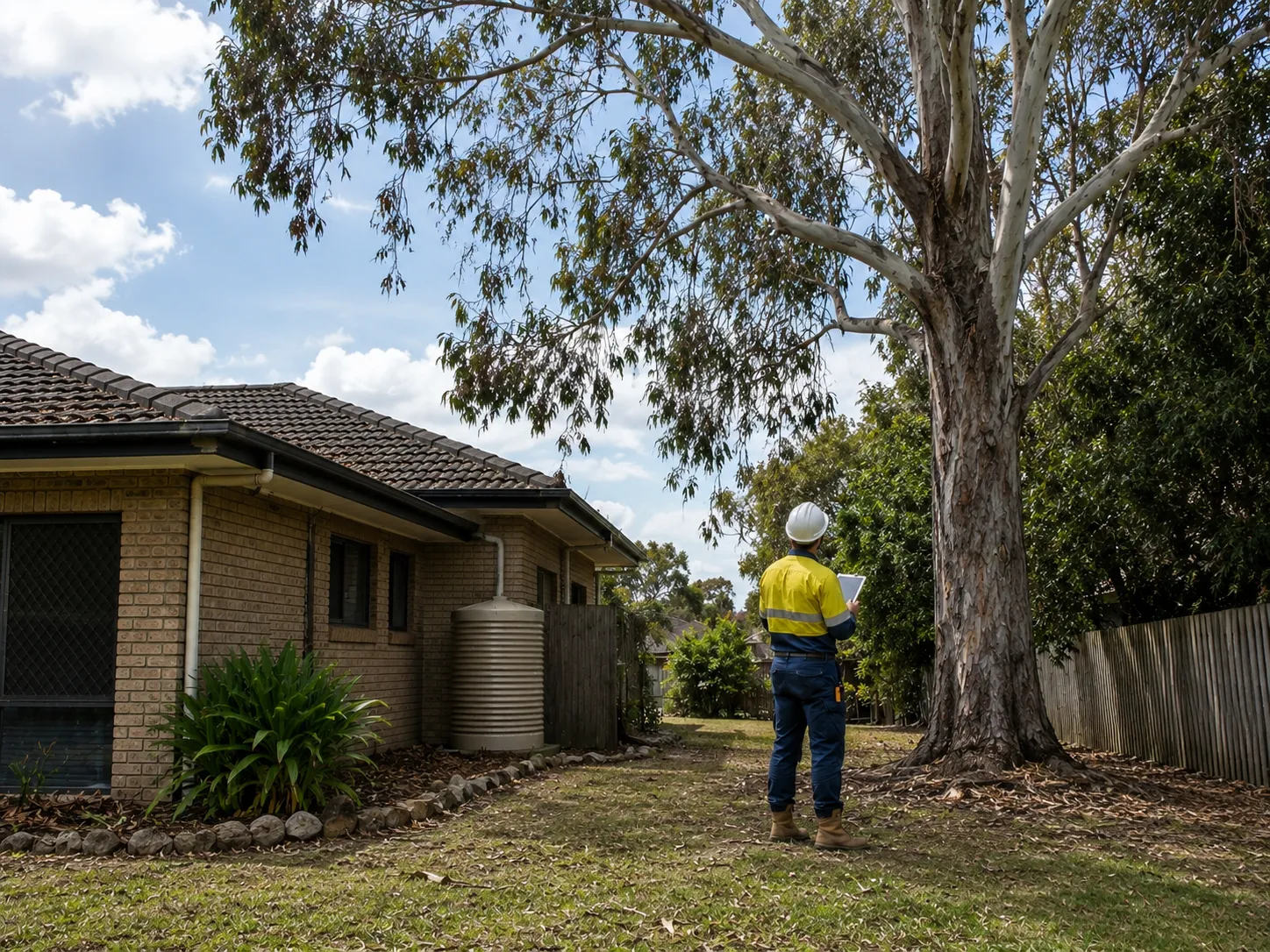
The tree's future growth is vital. A young tree may appear safely positioned but eventually develop a canopy that reaches the roof or roots that extend towards foundations and drainage. Assessing the likely mature size provides a better indication of whether the available space is suitable.
The larger a tree is expected to become, the more space it generally needs. As a broad planning guide, small trees may be suitable around 2-3 metres from a house and medium trees around 4-6 metres and large trees may require 6-10 metres or more. These figures are not universal clearances and should be considered alongside the species and site conditions.
Root systems can extend well beyond the trunk, particularly where moisture and oxygen are available. Trees with vigorous or spreading roots may require greater separation from foundations, paved areas, retaining structures and underground services.
The canopy's position can be just as important as the trunk's distance from the house. Branches repeatedly touching the roof, gutters, walls or windows can cause damage when they move in strong winds.
Other concerns include:
A tree can be a risk even when it is not close if it has structural defects or poor stability. A recent lean towards the house, dead branches, trunk cavities, decay, cracks or exposed roots can all warrant professional assessment.
Site conditions also matter. Saturated soil, previous root damage, restricted growing space and significant changes to the surrounding ground can affect stability. In these situations, the tree's condition should be assessed rather than relying on distance alone.
There is no universal minimum distance because the appropriate clearance depends on the tree's mature height, canopy spread, root system and the structures around it. As a planning guide, small ornamental trees may suit locations around 2-3 metres from a house, medium-sized trees around 4-6 metres, while large trees may need 6-10 metres or more.
As a general reference, Queensland home maintenance guidance recommends considering a tree’s mature height and keeping trees sufficiently separated from buildings to reduce the risk of roots interfering with footings.
The tree's expected mature size is more useful than its current dimensions. A young tree may have plenty of clearance today but eventually extend over the roof, gutters or windows. Its root system can also spread into areas containing foundations, paving or underground services.
If branches are already contacting the house, roots are affecting nearby structures or the tree is likely to outgrow its available space, an arborist can assess whether pruning and ongoing management are practical alternatives to removal.
A tree's current size can be misleading. Species vary considerably in their mature height, canopy spread, growth rate and root characteristics. A tree that appears manageable when young can eventually require substantial space and regular maintenance.
When assessing a tree, consider:
Fast-growing or spreading species may need more planning because they can outgrow a restricted location quickly. This does not automatically mean removal is necessary, but it may increase the need for regular professional assessment and pruning.
The best approach is to consider where the tree could be in 10 or 20 years rather than judging it solely on its current size. If it has already outgrown the available space, an arborist can determine whether it can be safely managed or whether removal is the more practical solution.
A tree growing too close to a house can create several problems when its roots, branches or canopy begin interacting with the property. The main concerns include structural movement, plumbing problems, roof and gutter damage, moisture issues and increased risk from falling branches.
Roots can influence soil moisture and may contribute to movement in susceptible or reactive soils. Large surface roots can also lift paving, paths and garden edging where there is insufficient space for them to develop.
Roots may also enter damaged or deteriorating drainage pipes through existing cracks or joints. This can contribute to recurring blockages and restricted wastewater flow.
Branches that repeatedly contact a roof or wall can cause wear during windy weather. Larger limbs may also fall during severe storms and damage roofing, windows, vehicles or other structures.
Leaves, twigs and other debris can accumulate in gutters and downpipes, increasing the risk of blockages and overflow. Persistent moisture around the roofline or house can contribute to deterioration of building materials.
Large branches over roofs, entrances, driveways or other frequently used areas can create a greater hazard if they fail. Deadwood, decay, weak branch unions and storm damage can increase this risk.
Trees growing close to a house can also provide pathways for pests to reach roofs and openings. Dense vegetation and accumulated organic material around the building can create damp conditions that may attract insects and other pests.
Tree roots do not usually break through sound foundations or intact pipes simply because a tree is nearby. Problems are more likely when roots encounter existing cracks, damaged joints, leaks or disturbed soil.
Roots can also influence surrounding soil by absorbing moisture. On susceptible soils, changes in moisture levels may contribute to ground movement that affects slabs, footings, paving or other structures.
Recognising the early signs of tree root damage can help homeowners investigate changes to paving, drainage and nearby structures before the problems become more serious.
Here are signs that warrant further investigation:
These signs do not automatically prove that the tree is responsible. Building movement and plumbing problems can have several causes, so the relevant issue should be properly diagnosed before deciding that tree removal is necessary.
Understanding the different causes of cracks and settlement is important because reactive soils, poor drainage, disturbed ground and changing soil moisture can produce similar symptoms.
Root cutting also needs caution. Removing major structural roots can weaken the tree's anchorage and increase its risk of failure, particularly during strong winds. Roots should not be cut simply because they are visible near a building. The tree, root system, soil and surrounding structures should be assessed first.
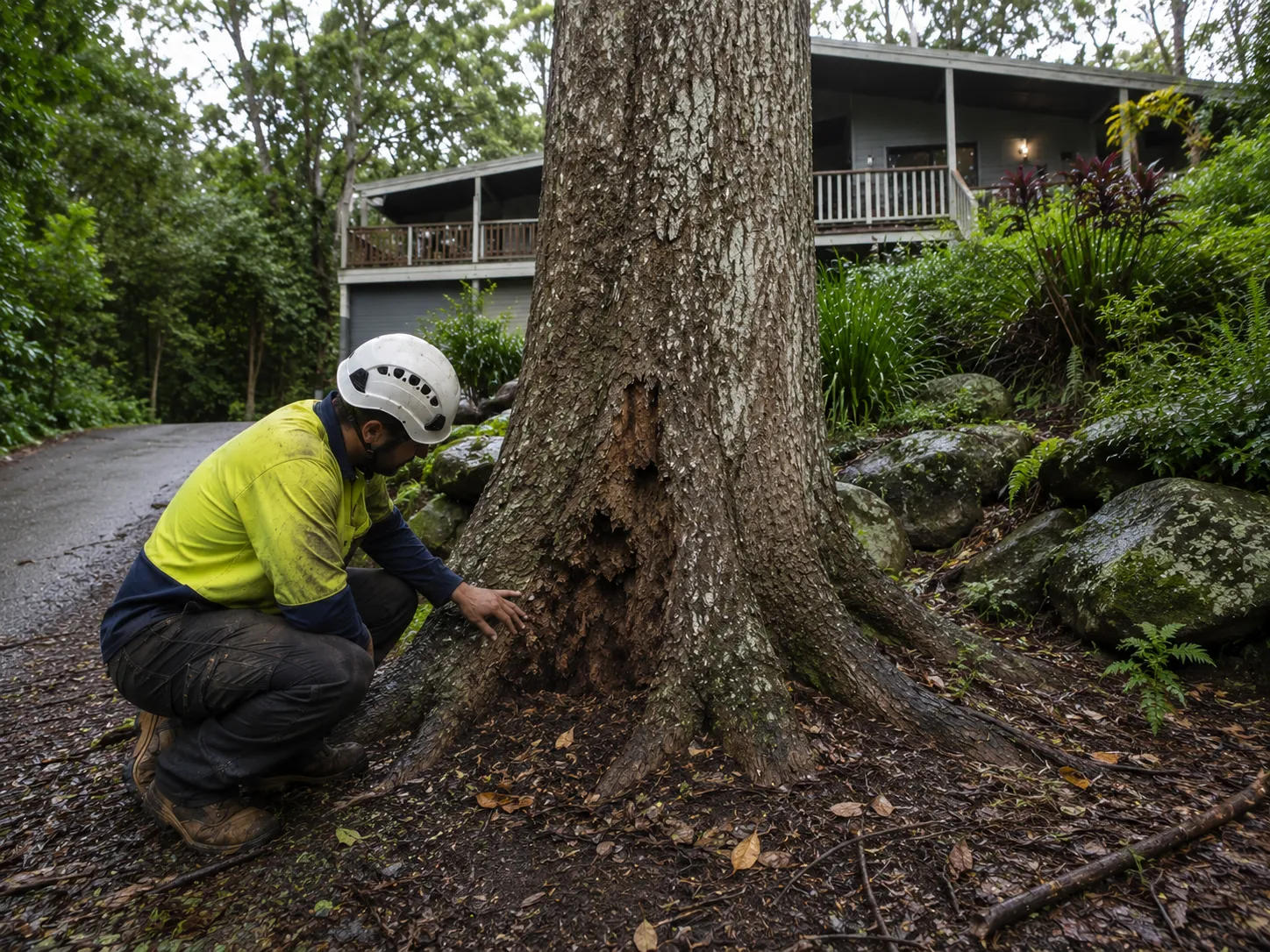
A tree does not need to be touching a house before it becomes a concern. Changes to its canopy, roots, trunk or surrounding ground can indicate that the available space is becoming inadequate.
Look for:
These signs do not automatically mean the tree needs to be removed. A qualified arborist can assess whether pruning and ongoing management can control the risk or whether removal is the safer option.
Yes, pruning can often be used instead of removal when the tree is healthy, structurally sound and the main concern is manageable canopy growth. Appropriate pruning can reduce branches over roofs, gutters and access areas while allowing the tree to remain on the property.
Pruning may be suitable when:
Pruning is less suitable when the main problem involves severe trunk decay, compromised roots, instability or a tree that has become fundamentally unsuitable for its location. Removing excessive canopy in an attempt to compensate for serious structural problems can also stress the tree and encourage weak regrowth.
Pruning should therefore focus on targeted cuts rather than topping or removing large amounts of healthy canopy unnecessarily. Avoiding common tree pruning mistakes is important because excessive canopy removal, topping and poorly positioned cuts can weaken the tree and create unsafe regrowth. The amount that can safely be removed depends on the species, age, condition and previous pruning history, so major work near a house is best assessed by a qualified arborist.
Tree removal may be the safer option when the risk created by the tree cannot be adequately controlled through pruning or other management. This can occur when the tree has serious structural defects, compromised roots or has simply outgrown the space available around the house.
Removal may need to be considered where there are:
The presence of one warning sign does not automatically mean removal is necessary. An arborist can assess the tree's condition, likelihood of failure and potential consequences before recommending the appropriate course of action.
Before pruning or removing a tree, homeowners should check local requirements and safety considerations. Tree protection rules can vary between councils and some properties may also be affected by planning controls, environmental protections or other restrictions.
Before arranging pruning or removal, check with the relevant local council to determine whether the tree is protected or whether approval is required. Depending on the property and location, controls may relate to vegetation protection, heritage, biodiversity or other planning requirements.
Properties in estates, community schemes or body corporates may also have additional rules governing vegetation.
Look for structural defects, root movement, dead branches, decay, leaning or signs of instability. Also consider whether branches could reach the house, vehicles, people or overhead services if they failed.
Work around powerlines requires care. Homeowners should not attempt pruning where there is a risk of contact with electrical infrastructure and should use appropriately qualified professionals who understand the relevant Queensland requirements.
Not every tree close to a house needs to be removed. Consider whether targeted pruning, improved maintenance or appropriate management can address the risk without compromising the tree.
The assessment should consider:
Where the tree can be safely managed, retaining it may provide shade, privacy and other benefits. Where its condition, location or future growth creates an unacceptable risk, removal may be the more appropriate long-term solution.
Determining whether a tree is too close to a house requires more than measuring the distance between the trunk and the building. Mature size, species, root behaviour, canopy spread, soil conditions and tree health all influence the level of risk. Early signs should not be ignored.
Lance's Tree Care can assess whether a tree can be safely managed through pruning or whether removal is more appropriate. Professional assessment can help identify the safest and most practical solution while taking Queensland's local conditions and requirements into account.


