Knowing whether a tree is dead, dying or simply under stress is not always straightforward. A tree may retain intact bark or part of its canopy even as internal decline develops. Conversely, a tree affected by drought, storms, excessive moisture or recent construction may recover once the underlying problem is addressed. An accurate assessment can help protect the tree, surrounding landscape and nearby property. Lance’s Tree Care provides professional tree services in Tamborine Mountain to identify potential concerns and recommend the most appropriate course of action.
This guide explains how to recognise signs of tree stress, decline and structural risk by examining the canopy, branches, bark, roots and surrounding soil. It also outlines when monitoring or professional care may support recovery and when removal may be the safest option.
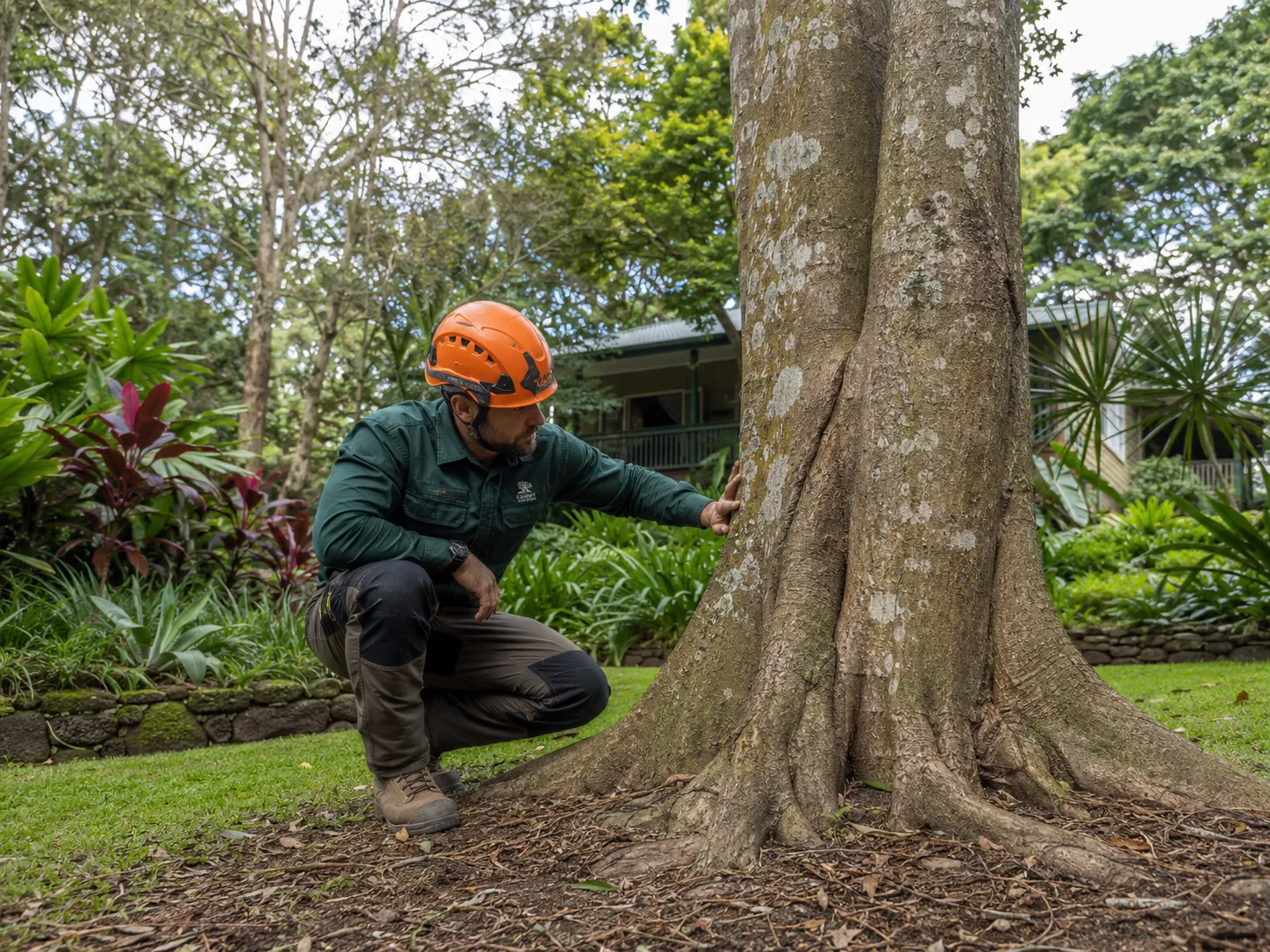
Tree decline is rarely a simple dead-or-alive situation. Early warning signs may be subtle, develop slowly or resemble normal seasonal changes. Some mature trees can appear weathered for many years while remaining structurally sound, while others may develop serious defects with few obvious symptoms.
Trees also respond to damage in complex ways. They may shed leaves, allow smaller branches to die or compartmentalise damaged tissue to preserve essential functions. These natural responses can hide the extent of a problem from a quick visual inspection.
Understanding the difference between temporary stress, declining health and structural instability often requires several signs to be considered together.
Seasonal cycles and natural ageing can sometimes look like serious decline. Depending on the species, a healthy tree may naturally shed older leaves, lose interior foliage or retain some dead twigs within the canopy.
During dry or unusually hot periods, trees may also:
These responses help reduce moisture loss and do not necessarily mean the tree is dying. If conditions improve and the roots and branches remain healthy, the tree may recover during a later growing period.
Mature trees may also develop rough bark, hollows or isolated dead branches. These features should be assessed carefully, but they do not automatically indicate that the entire tree is unsafe.
Some of the most significant tree problems develop below ground or inside the trunk. Root decay, soil compaction, damaged structural roots and internal wood decay may progress for years before the canopy shows clear symptoms.
Surface roots can appear healthy even when deeper anchoring roots have been damaged by excavation, waterlogging or previous construction. Similarly, a trunk may retain its normal external shape while internal decay reduces the amount of sound wood.
Pests and diseases can make diagnosis more difficult because many problems cause similar symptoms, including leaf discolouration, wilting, premature leaf drop, branch dieback, reduced new growth and thinning foliage. Pests and diseases can make diagnosis more difficult because many problems cause similar symptoms, including:
Queensland guidance on plant diseases and insect pests can also help property owners recognise unusual symptoms that may require further investigation.
A visual symptom alone may not reveal whether the problem is temporary, treatable or part of a wider decline.
Weather conditions, soil quality and physical damage can cause a healthy tree to deteriorate quickly. Before assuming a tree is dead, it is important to consider recent changes in the surrounding environment.
In Tamborine Mountain and surrounding areas, tree health may be affected by extended dry periods, intense rainfall, strong winds, humid conditions and changes to drainage. Construction, excavation and landscaping can also affect roots long after the work has been completed.
A practical approach to seasonal tree care in Tamborine Mountain can make it easier to identify changes caused by normal growth, dry periods and storm conditions.
Identifying the underlying cause early may allow a stressed tree to recover before the damage becomes irreversible.
Extended heat and dry soil commonly cause:
A tree may still be viable if healthy buds remain, branches retain some flexibility and parts of the canopy continue producing foliage.
Slow, deep watering may support recovery during dry conditions, provided the soil is not already waterlogged. Water should be directed across the root zone rather than concentrated immediately against the trunk.
A wide layer of mulch can also help retain soil moisture and moderate temperature changes. Mulch should be kept away from direct contact with the trunk to reduce the risk of excess moisture and decay around the base.
Too much water can be as damaging as drought. Prolonged rainfall, compacted soil or altered drainage may prevent oxygen from reaching the roots.
Possible signs of water-related stress include:
Trees growing in poorly drained areas may decline gradually, especially if soil has been added over the roots or water is being redirected towards the trunk.
Improving drainage may help in some situations, but excavation around established roots can cause further damage. Significant drainage changes should therefore be planned carefully.
Strong winds can strip foliage, break limbs and place pressure on the trunk and root system. A tree may look sparse after a storm but still recover if its main structure and roots remain stable.
More concerning signs include:
Large, elevated or structurally compromised branches should not be removed by an untrained person. The area beneath damaged limbs should be kept clear until the tree can be assessed.
Construction and landscaping are common but sometimes overlooked causes of tree decline. Trenching, excavation, driveway installation, retaining work and changes to soil levels can cut roots or reduce the oxygen and moisture available to them.
Decline caused by root damage may not become obvious until months or years later. Early signs can include:
Damage to the trunk from lawn equipment, vehicles or machinery can also expose living tissue. Long cracks, missing bark or persistent seepage around an injury may indicate significant stress.
Damaged areas should not be aggressively cut, cleaned or covered with wound treatments unless recommended by a qualified tree professional.
A stressed tree is not necessarily beyond saving. Many trees retain enough healthy tissue and stored energy to recover when the cause of stress is identified early.
The most encouraging sign is continued life across part of the tree. Healthy new growth, flexible branches and active buds can indicate that the tree is still functioning, even if its appearance has declined.
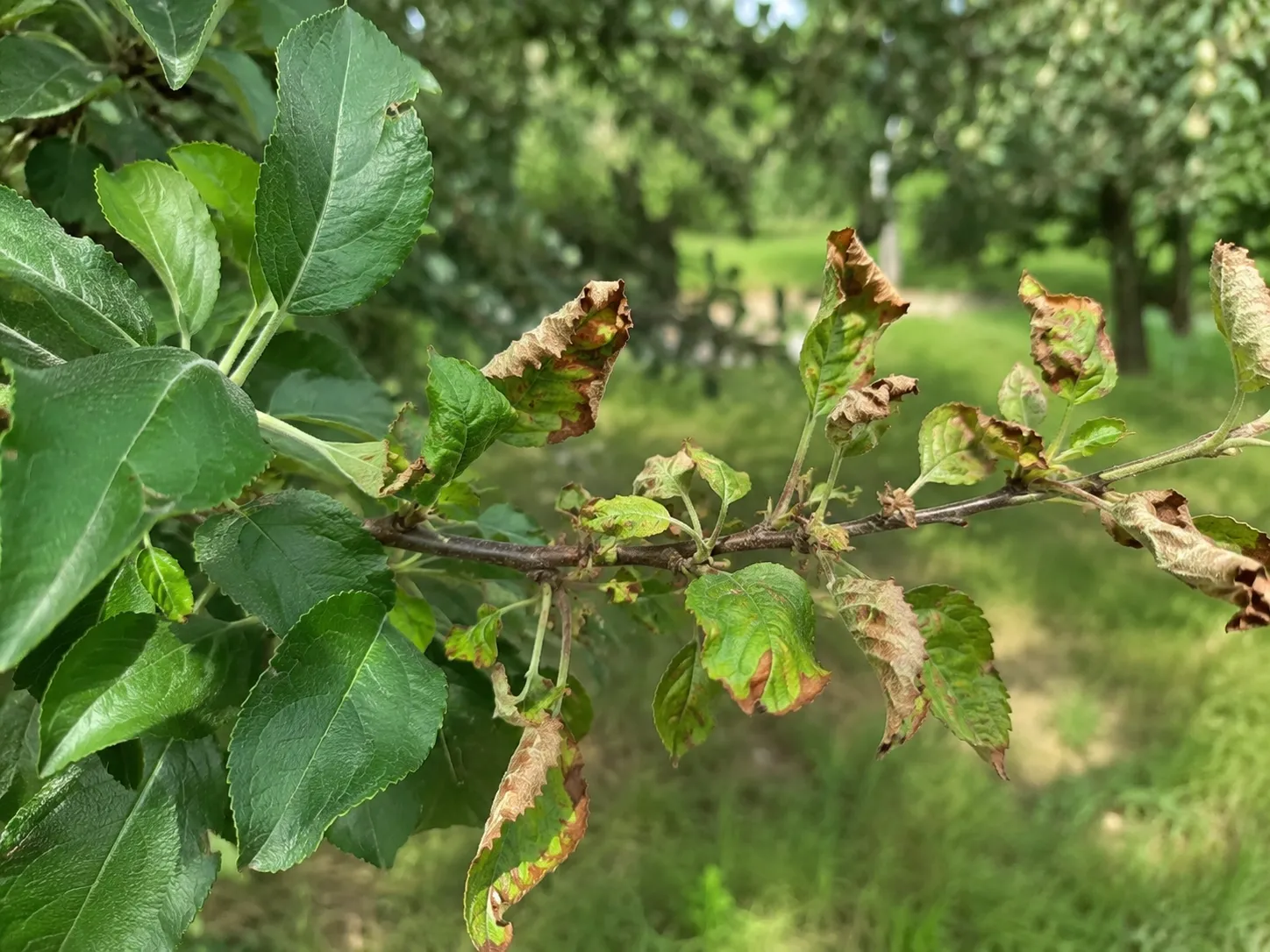
Thinning foliage may indicate stress rather than death if at least some branches continue to leaf out.
Leaves may be:
Reduced foliage can result from dry soil, excessive moisture, compacted ground, root disturbance, pests or nutrient problems.
The pattern of decline is important. A uniformly thin canopy may have a different cause from dieback affecting only one side or the uppermost branches.
Dead twigs at the outer edges of the canopy can occur when a tree redirects resources towards its main branches and trunk.
If only the branch tips are affected while inner sections continue producing leaves, the tree may recover after the underlying stress is reduced. Appropriate professional tree pruning may be needed to remove dead material, but large or elevated branches should be handled by a professional.
A few dead twigs do not necessarily indicate whole-tree failure. Widespread dieback across major branches is more concerning.
Leaves that wilt or curl during hot weather may be responding to moisture stress. If the foliage improves after cooler conditions or appropriate watering, the tree is still responsive.
Even when some leaves turn brown or fall early, recovery may be possible if:
Repeated wilting, particularly when the soil is already moist, may point to root damage or poor drainage rather than a lack of water.
New shoots, active buds and fresh leaves are positive signs. Growth may be limited or uneven, but it confirms that at least part of the tree remains alive.
The presence of new growth does not prove that the tree is structurally safe. A tree can remain biologically alive while containing serious trunk, branch or root defects.
A dying tree usually shows progressive decline across several parts of its structure. One symptom alone may not confirm that the tree is beyond recovery, but multiple warning signs appearing together increase the likelihood of serious decline.
Progressive canopy thinning is one of the clearest indicators of declining health.
Warning signs include:
A canopy that has become heavily one-sided may indicate root damage, branch death or previous structural failure.
Comparing the tree with nearby trees of the same species can be helpful, but differences in soil, drainage, exposure and previous damage should also be considered.
Dead branches are usually dry, brittle and lacking in healthy buds or foliage. Smaller twigs may snap easily rather than bend.
A light scratch test on one or two small, accessible twigs may help determine whether localised tissue is alive. Green or moist tissue beneath the outer bark generally indicates living material, while uniformly brown and dry tissue suggests that the twig is dead.
However, the scratch test only assesses the small area tested. It cannot confirm whether the entire tree is healthy, likely to recover or structurally safe.
Large areas of loose or missing bark can indicate that the tissue beneath has died, particularly when the exposed wood is dry and there is no evidence of healthy growth around the edges.
Other concerning signs include:
Natural bark shedding varies between species, so loose bark should be considered alongside the tree’s foliage, growth and overall structure.
Fungal fruiting bodies, including bracket-like growths or mushrooms around the trunk or roots, may indicate decaying wood.
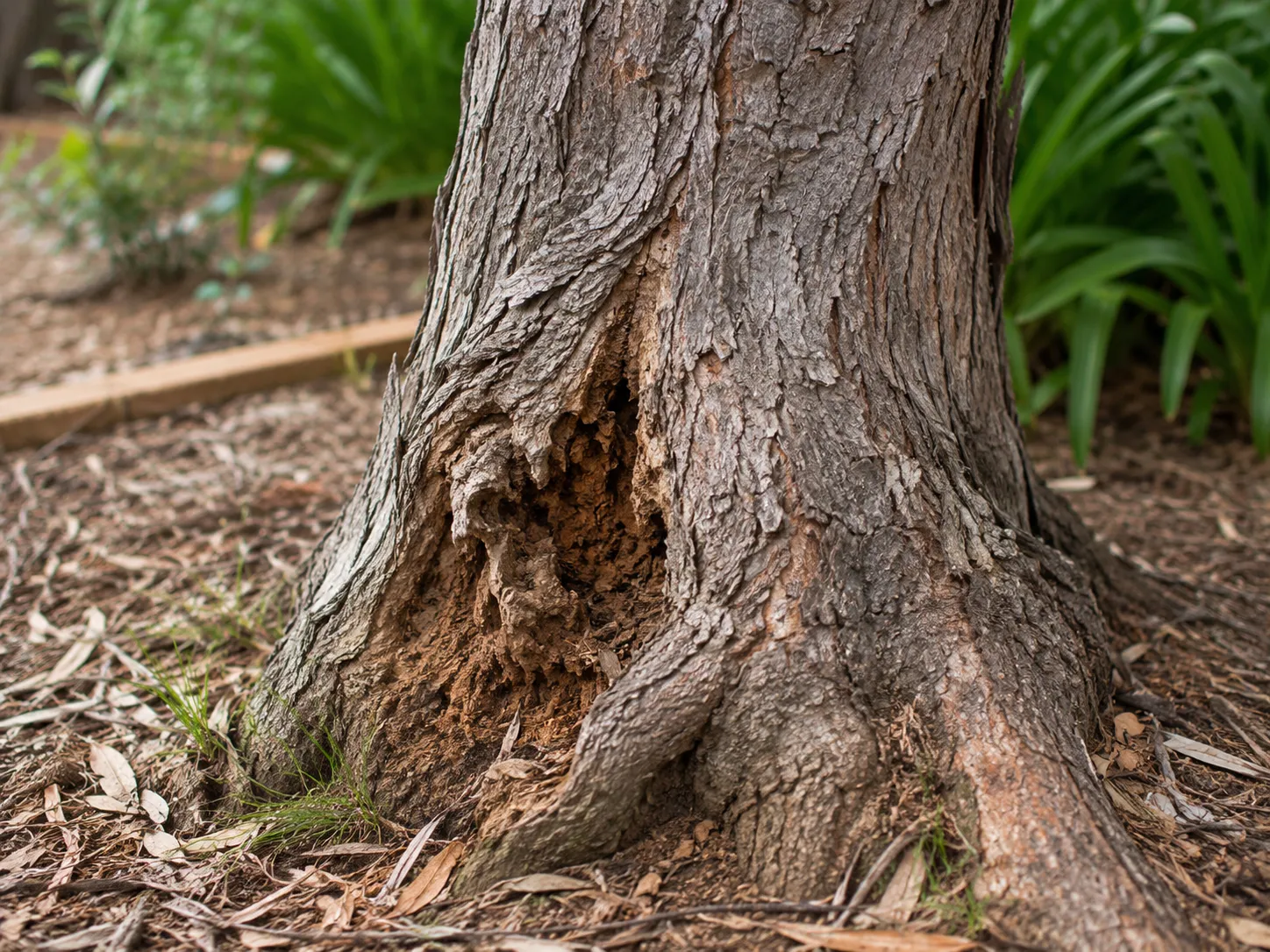
The seriousness of fungal growth depends on:
Fungal growth does not automatically mean the tree must be removed. However, growth emerging from the trunk, major branch unions or root flare should be professionally assessed, particularly when combined with canopy decline or structural defects.
A hollow or partially decayed tree is also not automatically unsafe. Its stability depends on the location and extent of the decay, the surrounding sound wood and the loads placed on the tree.
A deciduous tree that remains completely bare well after comparable trees have produced foliage may be dead or severely declined.
A dead evergreen may show:
Before deciding that the tree is dead, seasonal timing, tree species and recent weather should be taken into account.
Tree health and tree safety are related, but they are not the same. A tree can be alive and producing foliage while still containing defects that increase the likelihood of branch or whole-tree failure.
Risk becomes more significant when a defect could affect a house, driveway, road, play area, neighbouring property or another frequently used space.
Some trees naturally grow at an angle and remain stable for many years. A lean becomes more concerning when it develops suddenly or continues to increase.
Urgent warning signs include:
These symptoms may indicate that the root plate is moving. People, vehicles and animals should be kept away from the potential fall area until the tree is assessed.
Dead branches can fall without warning, even in calm weather. The risk increases when they are positioned above homes, driveways, footpaths, play areas or places where people regularly gather.
Partially detached, split or hanging limbs require prompt attention. Homeowners should not stand beneath them or attempt to pull them down.
Cracks where a major limb meets the trunk can indicate that the union is beginning to separate. Fresh cracks, exposed wood or movement during wind are particularly concerning.
Branches growing from narrow, included unions may be more vulnerable to splitting. Crossing and rubbing limbs can also create wounds that weaken the affected branches over time.
Structural concerns may include:
These signs require professional interpretation. Tapping the trunk or judging it by sound is not a reliable way to determine how much structural strength remains.
Roots provide both stability and access to water and nutrients. Major root damage can make a tree vulnerable even when the canopy still looks relatively healthy.
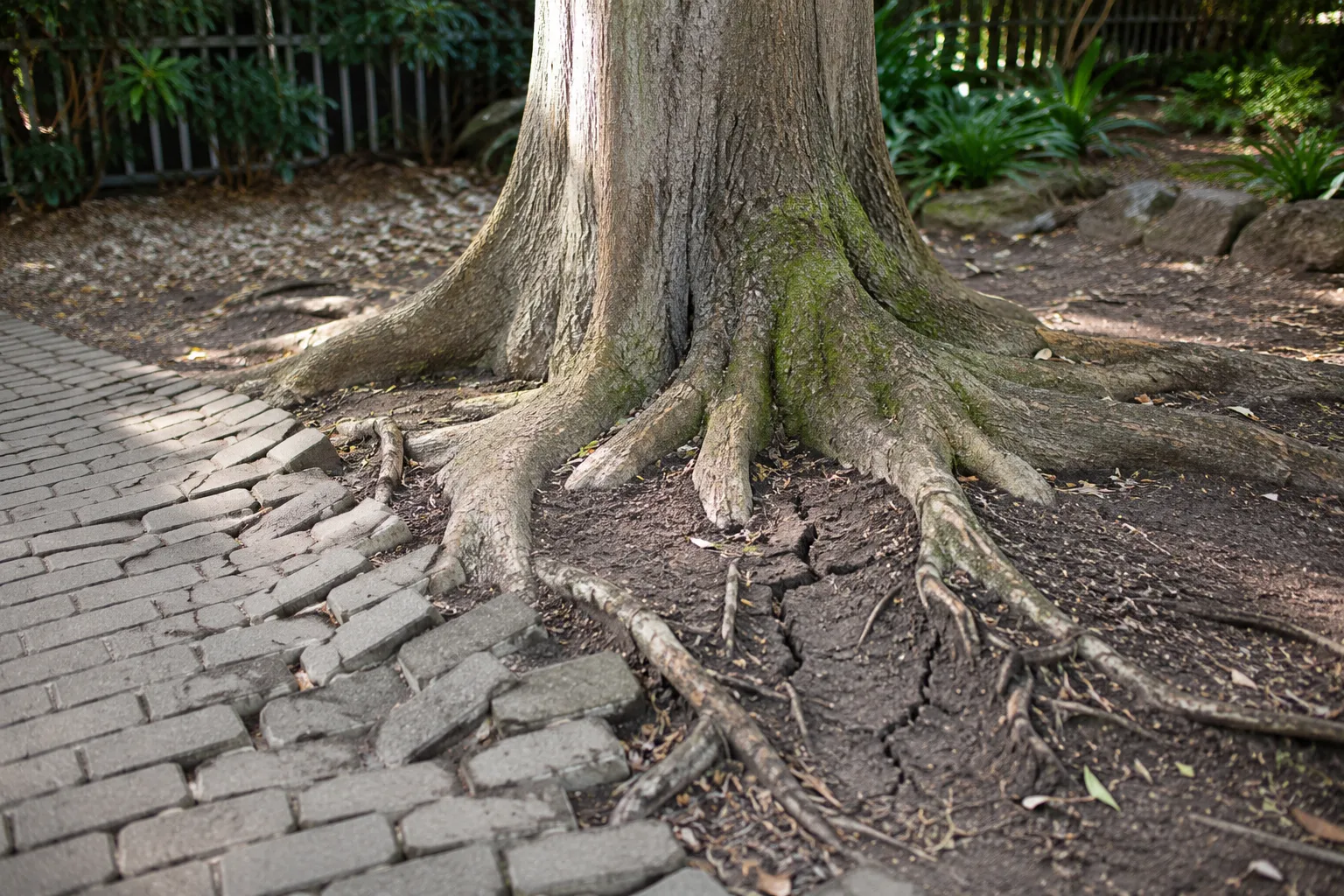
Possible concerns include:
Root problems are often difficult to assess from the surface. Property owners should also watch for other signs of tree root damage, including lifted paving, soil movement and changes around nearby structures. Digging around the base to investigate can cause additional damage and should be avoided unless carried out appropriately.
A basic ground-level inspection can help identify whether professional advice is needed. Homeowners can look for:
Checks should be made from a safe distance. Homeowners should not climb the tree, cut large branches, probe cavities or stand beneath damaged limbs.
WorkSafe Queensland warns that tree felling with a chainsaw can be dangerous and should only be undertaken by people with appropriate training, experience and competence.
Trees near power lines require additional caution and should only be approached by appropriately authorised professionals.
Not every tree problem requires immediate removal. Monitoring may be suitable when:
Monitoring should be active rather than occasional. This may involve photographing the tree, recording changes in canopy density and checking it after storms or periods of unusually wet or dry weather.
A decline that continues despite improved conditions should be reassessed.
Before removing a tree or assuming it is dead, a qualified arborist should assess its condition on site. Symptoms that appear severe may sometimes be manageable, while subtle defects can create risks that are not obvious from the ground.
An arborist considers the tree’s health, structure, species, location and surrounding targets before recommending a course of action.
Discoloured leaves, dead branches and peeling bark can have many possible causes. A professional assessment may include:
A correct diagnosis helps determine whether watering, soil improvement, pruning, pest management, monitoring or removal is appropriate.
An arborist can assess whether defects are likely to affect the tree’s stability. This may involve considering:
This distinction is important because a tree may be unhealthy without posing an immediate hazard, or alive and green while still presenting a significant structural risk.
Professional advice should provide more than a simple decision to keep or remove the tree. Depending on its condition, options may include:
The most appropriate option depends on the tree’s condition, location, value and likelihood of recovery.
Determining whether a tree is dead, dying or simply stressed requires more than relying on a single symptom. Changes in foliage, branches, bark, roots and surrounding soil can help indicate whether the tree may recover or needs professional attention.
Trees with large dead limbs, a newly developed lean, visible root movement, fresh structural cracks or significant trunk damage should be kept clear and inspected promptly. Homeowners should avoid climbing the tree or attempting to remove large or unstable branches themselves.
When professional advice is required, Lance’s Tree Care can assess the tree’s health and structural condition and recommend whether monitoring, pruning, further care or removal is the most appropriate solution.


