Storms can leave behind far more than fallen branches and scattered debris. Trees damaged by high winds, heavy rain or lightning strikes can create safety hazards, cause property damage and complicate the insurance claims process. For property owners dealing with storm-related tree issues, understanding how to document damage correctly is an important step towards protecting both the property and the claim. For those arranging tree services in Tamborine Mountain after a storm, Lance's Tree Care can assess damaged trees and identify immediate safety risks.
This article explains the steps for documenting storm-damaged trees before cleanup begins. From identifying urgent hazards to keeping the right records, these practices can help support a smoother insurance claim while ensuring safety remains the top priority throughout the recovery process.
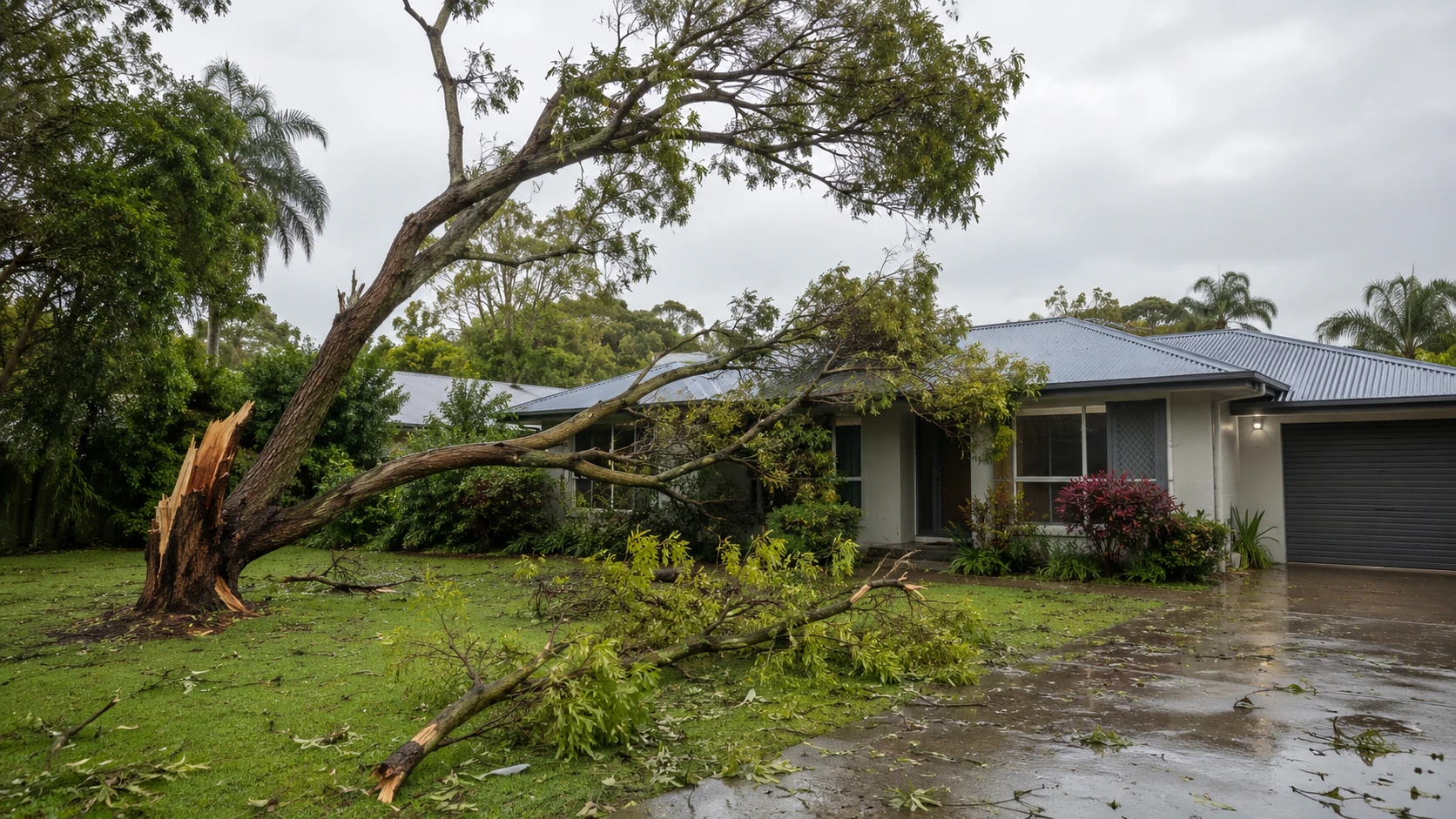
Storm-damaged trees can hide serious and life-threatening hazards that are not obvious at first glance. Before moving closer to inspect or photograph damage for an insurance claim, pause and assess the area from a safe distance. No documentation is worth risking injury from a falling limb, a downed power line or a failing tree trunk.
A careful visual scan can help identify unstable branches, cracked trunks, electrical hazards and structural damage to nearby buildings or vehicles. Only after the scene appears stable should closer inspection or photo documentation begin, and even then, photos should be taken from safe positions on solid ground.
Any interaction between trees and utilities creates a high-risk situation. If a limb or tree is touching or resting on a power line, the area must be treated as energised and extremely dangerous.
From a safe distance, look for:
Assume every wire is live, even if power appears to be out. Do not attempt to move branches off lines, touch fences, metal gutters or puddles near downed wires, or drive over fallen lines. Contact the utility provider or emergency services before going any closer. Insurance photos can be taken later once authorities confirm the area is safe.
Storms can leave trees partially failed and highly unstable. A tree that is still standing can be more dangerous than one that has already fallen if the trunk or major limbs are compromised.
From outside the immediate fall zone, look for:
Avoid standing directly beneath damaged canopies or near the tension side of a leaning tree. Even light wind or vibration from walking nearby can cause failure. If there is any doubt about stability, stay clear and arrange for a qualified arborist to assess the tree before attempting close-range photos.
Hazards are not only overhead. Storm damage often affects the ground and surrounding structures.
Check the area for:
Never climb onto a damaged roof or into a crushed vehicle to take pictures. The added weight can trigger collapse or cause the tree to shift. Stay on firm ground outside any area that could be struck if the tree rolled, slid or fell further. Use zoom or different angles to document the damage instead of moving closer.
Some storm damage may only require routine cleanup, while other situations create urgent safety hazards that require immediate professional response. Knowing the difference is critical for protecting people, preventing additional property damage and supporting a strong insurance claim.
Insurance providers also distinguish between routine cleanup and emergency mitigation. When a tree poses an active threat or has already caused structural damage, prompt action may be necessary to keep people safe and limit further loss.
Emergency tree work cannot wait when there is a clear risk to life or significant property damage. Documentation should start quickly where it is safe to do so, but safety must come first.
Indicators that emergency service is required include:
Access to the area should be restricted. Photographs and videos should only be taken from a safe distance. Close inspection, climbing and cutting should be left to qualified tree and utility professionals.
Even if no one is injured, a damaged tree can quickly turn a minor claim into a major one. Insurance policies often expect reasonable steps to be taken to prevent further damage, such as reducing the risk of water intrusion or roof collapse.
Emergency work should not be delayed when:
Where possible, photograph the tree from all safe angles and capture clear images of any contact points with the structure. After that, emergency crews may cut and remove sections to unload the tree from the roof or stabilise the area. Keep all invoices, work orders and time-stamped photos, as insurers often classify this type of work as emergency mitigation.
Some tree emergencies are also utility or public safety issues. In these situations, tree work must wait until the appropriate authority secures the scene.
Contact the utility company or emergency services before arranging tree work when:
Insurers typically expect policyholders to report these hazards promptly. Documentation should be limited to safe-distance photos and notes until the area is cleared. Once the utility provider or authority confirms the site is safe, emergency tree work can proceed and the combined records can support the claim.
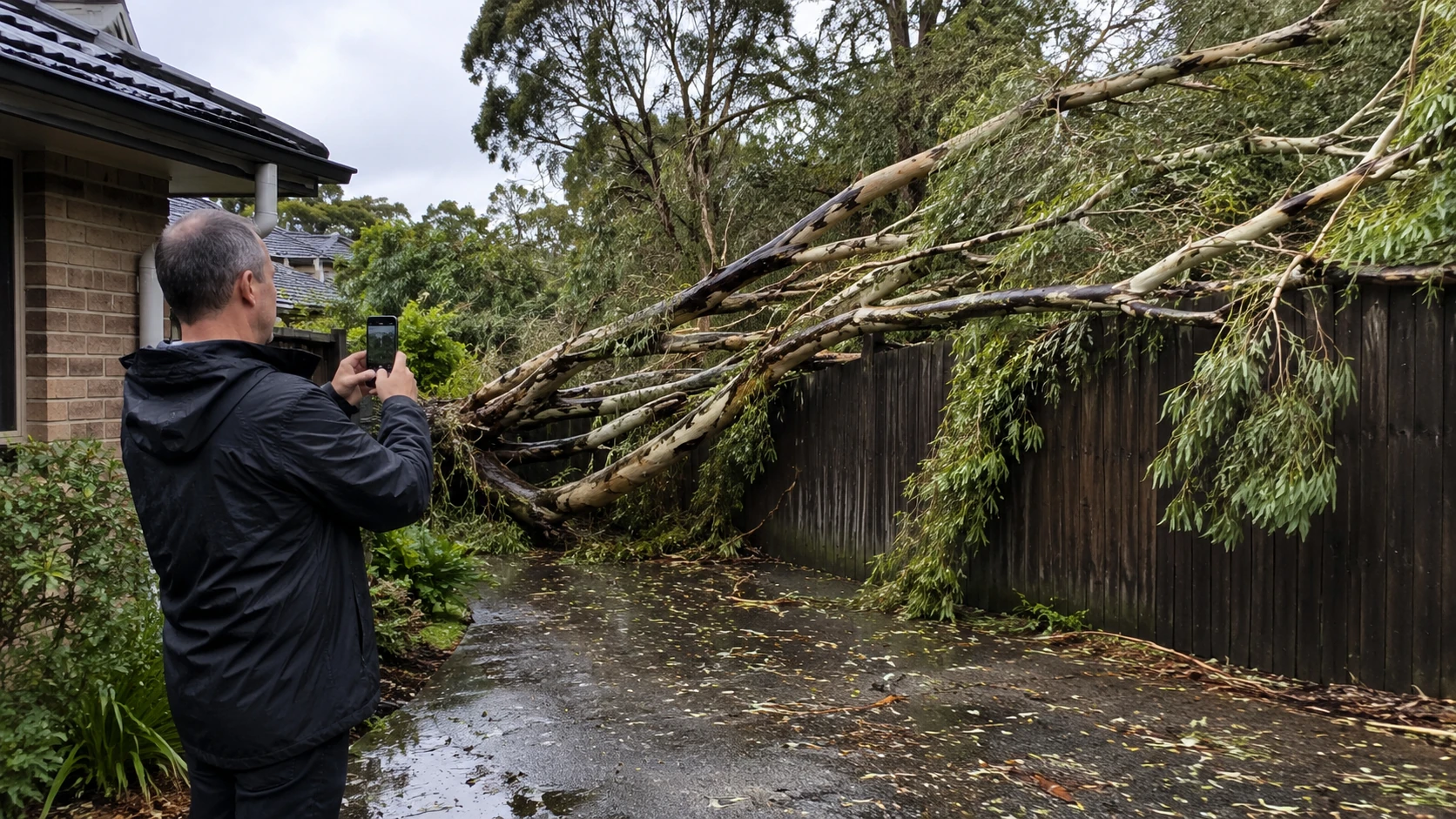
Insurance adjusters rely heavily on visual evidence. The more clearly storm damage is documented before anything is moved or cleaned up, the easier it is to show what happened and what needs to be assessed. Cleanup that starts too early can remove important evidence of the extent of the damage and how it affected the property.
Thorough photographs and written notes taken as soon as it is safe to do so create a factual record that supports the claim. Detailed evidence can also reduce questions, delays and coverage disputes.
Start with wide shots that show the full property and the position of the damaged tree. Include street views and angles that clearly connect the tree to the home, outbuildings, fences, driveways or vehicles. These context photos help an adjuster understand where the tree stood before the storm and what it struck when it failed.
If multiple trees are affected, photograph each one separately. Capture the full height of each tree if possible and the direction it fell. Where visibility is limited, take several overlapping photos from different angles rather than trying to fit everything into one image.
After establishing the overall scene, document specific impacts. Photograph broken branches on roofs or gutters, holes in roofing materials, crushed fences, dented vehicles, cracked paving, damaged retaining walls or affected landscaping. Take both mid-range shots that show the damage in relation to the structure and close-ups that show the severity.
These details can be important if the insurer questions whether the tree was healthy before the storm or whether the damage was caused by the storm event. Photograph any storm-related hazards, such as hanging limbs lodged high in the canopy or branches pressing against buildings or utilities.
Where possible, time-stamp photos using camera or phone settings. Avoid editing or applying filters so the images remain accurate and credible.
Along with photos, create simple written notes. Record the date and time of the storm, the type of storm event and when the damage was first discovered. Note which rooms, outdoor areas or structures were affected and whether there were immediate safety concerns, such as water entering through a damaged roof.
If emergency work is required before the adjuster arrives, take photos before, during and after the work. Keep receipts and write down who performed the work and why it was necessary.
Do not discard large limbs or remove tree debris until the adjuster has either visited the site or provided written approval. Where debris must be moved for safety, photograph its location first, then record how much material was moved so the original scale of the damage can still be understood.
Non-urgent tree work should wait until the insurance position is clear. Removing branches that are no longer a safety risk or cutting up a fallen tree too early can make it harder to prove the extent of the damage and may affect what the insurer agrees to pay. A short call to the insurer before booking non-emergency work helps align the documentation and scope of work with the policy requirements.
Insurers may have specific rules about what must be photographed or inspected before cleanup, what is considered emergency work and what needs prior approval. Checking these details in advance ensures that evidence of tree damage, impact points and property loss is captured in a way the claims team can assess.
Insurers generally allow immediate work that is clearly required for safety, such as removing a tree that is leaning onto a house or blocking essential access. Other work may be considered non-urgent and should not proceed until the insurer confirms the next steps.
Before arranging a tree service for non-urgent tasks, ask the insurer what can be done without affecting the claim. The insurer may request additional photos, a written quote or a brief description of the tree and surrounding damage before work starts.
Insurers often have preferred procedures for documenting tree damage. In some cases, they may also recommend or require certain contractors.
Useful points to confirm include:
Having these instructions before non-urgent work begins ensures that any report or invoice from a tree care company contains the information the insurer expects, such as the likely cause of failure, visible storm damage and the condition of the tree before the event.
Non-urgent tree work that involves a high cost should be cleared with the insurer in advance. Insurers may decline to reimburse work they regard as beyond what is necessary to address the insured damage, such as optional cosmetic pruning or removal of healthy trees the storm did not affect.
Before approving a quote for non-emergency work, ask the insurer:
Confirming these details helps avoid disputes later and ensures the claim reflects work the insurer has agreed to consider.
Insurers rely on paperwork to verify what work was necessary, what it cost and whether it was related to the storm. Detailed quotes, invoices and written assessments from qualified tree professionals can make the difference between a smooth claim and a disputed one. Everything connected to the damage, from the first emergency visit to the final cleanup, should be documented and stored together.
Accurate documents not only support the amount claimed, but also show that safety risks were handled promptly and reasonably. Insurers look for clear evidence that the work carried out was necessary, not excessive and directly linked to the storm event.
Storm damage often requires urgent action, but it is still important to capture clear written quotes or estimates before non-emergency work proceeds. A useful quote should identify the company, the property and the specific trees being addressed.
A strong supporting quote should usually include:
If verbal approval is given on site, request that the arborist follow up with an emailed estimate or work order before starting non-emergency tasks. Screenshots of texted quotes should also be saved and backed up in cloud storage or email.
Once work is complete, invoices become the main cost proof for the claim. Insurers typically prefer invoices that mirror the detail of the quote and show exactly what was done.
An insurance-ready invoice should clearly show:
Keep copies of all payment confirmations, such as bank statements or credit card receipts. These can help resolve questions if the insurer needs proof that the invoice was paid.
For significant losses or large mature trees, a written tree assessment from a qualified arborist can strengthen the claim. Insurers may use this type of report to confirm that the storm, rather than neglect or pre-existing disease, caused the failure.
A helpful assessment typically includes:
All quotes, invoices and assessments should be organised with the policy number and claim number once assigned. Store them with photo documentation, notes and correspondence from the insurer so the full claim record is easy to access.
Navigating a storm damage insurance claim often depends on the quality of the documentation gathered before cleanup and repair work begin. Clear photographs, accurate notes, supporting quotes and professional assessments help create a complete record of the damage and show that appropriate steps were taken to protect the property from further loss.
Just as importantly, recognising when a damaged tree presents an immediate safety risk can prevent injuries and additional structural damage. When storm-damaged trees are involved, professional guidance can help property owners respond safely, document the damage properly and move through the claims process with clearer evidence.


